
Plan Expense – A Subject Matter Review - Revised
A 2026 revision of the foundational white paper on retirement plan expenses, covering settlor versus plan expenses, allocation methods, prohibited transactions, the 408(b)(2) and 404a-5 disclosure rules, current case law, and a full expense-definition checklist.
 David Witz75 min read17,210 words
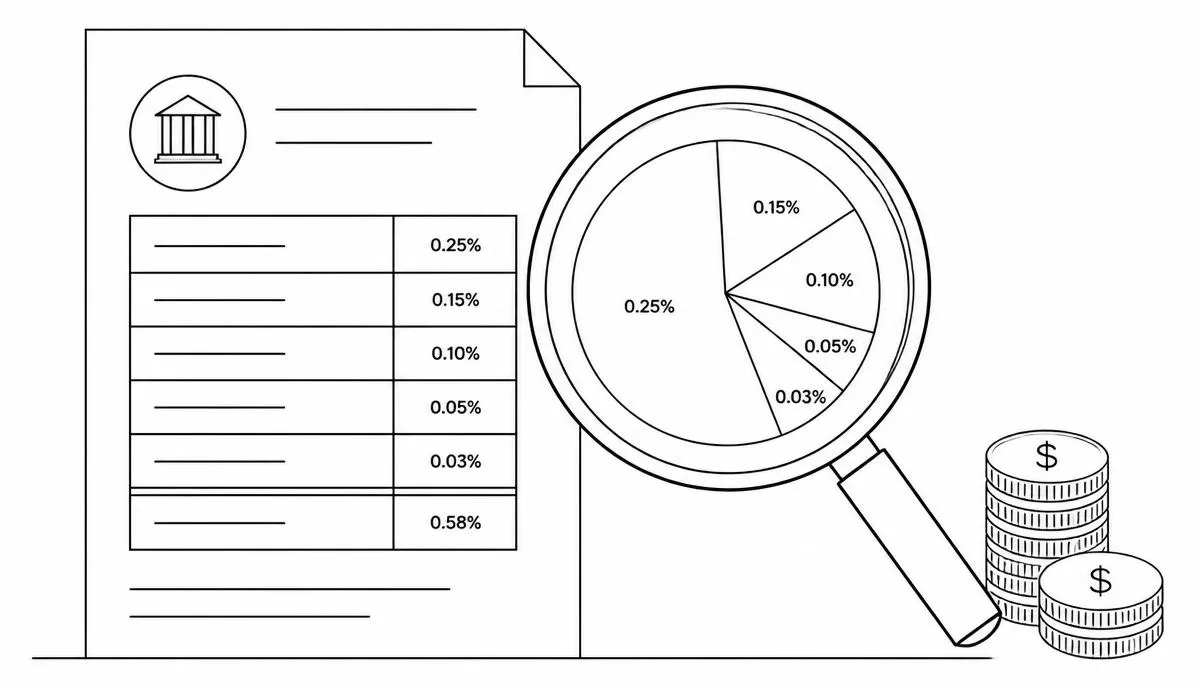
The adequacy of the disclosure of fees and expenses to both plan sponsors and participants has been introduced as an important issue. (This was the focus of the public hearing held by the Department of Labor on November 12, 1997.) It is clear from evidence in the literature that not all investment products disclose the fees and expenses charged to a 401(k) plan, nor are all of the fees and expenses charged by service providers disclosed. For example, we have demonstrated that the fees imposed on stable value accounts are not usually identified and that other charges, such as sales fees, are often not disclosed. Adequate disclosure of fees and expenses should be important to sponsors as they select 401(k) service providers and monitor their performance. The disclosure of fees and expenses is also important to plan participants as they select among available investment options. ERISA charges DC plan sponsors with a fiduciary responsibility to act in the best interests of the plan participants. This implies that plan sponsors will know the costs of the services they procure and will apply due diligence to minimize theses costs in the light of the level of services desired. [PWBA Study of 401(k) Plan Fees and Expenses – April 13, 1998] (emphasis added)
Executive Summary
This paper originated in 2006 and remains valuable as a framework for understanding retirement plan expenses. The 2026 revision preserves that framework while updating the disclosure rules, prohibited-transaction analysis, monitoring standard, and case law that now governs fee oversight.
- Reasonable does not mean lowest. Fiduciaries should evaluate price together with services, quality, risk, conflicts, plan needs, and available alternatives and document why the arrangement is reasonable.
- Service-provider disclosure is now central. Under 29 C.F.R. § 2550.408b-2, covered providers generally must disclose specified services and direct and indirect compensation so the responsible plan fiduciary can evaluate the arrangement.
- Participant fee disclosure is also specific. For participant-directed individual account plans, 29 C.F.R. § 2550.404a-5 generally requires recurring plan and investment information and quarterly disclosure of administrative and individual fees actually charged to participant accounts.
- Monitoring is continuous. Tibble v. Edison International and Hughes v. Northwestern University reinforce that prudence is an ongoing, context-specific process, not a one-time selection event.
- Prohibited-transaction documentation matters. Cunningham v. Cornell University (2025) confirms that the § 408 exemptions are affirmative defenses; fiduciaries should therefore maintain a contemporaneous record supporting the requirements of § 408(b)(2) for service arrangements.
Publication note: This white paper is educational and is not legal advice. Current regulations, Form 5500 instructions, plan documents, service-provider disclosures, and plan-specific facts should be reviewed with ERISA counsel before applying any conclusion to a particular plan.
–––––
Introduction
The Employee Retirement Income Security Act of 1974 (ERISA) established the federal framework for fiduciary responsibility governing retirement plan management and plan assets. Section 404(a)(1)(B) requires a fiduciary to act “with the care, skill, prudence, and diligence under the circumstances then prevailing” that a prudent person acting in a like capacity and familiar with such matters would use. The focus is therefore not a label such as “prudent expert,” but a disciplined, informed, and well-documented process that reflects the plan’s actual circumstances.
“under circumstances then prevailing”
“Circumstances then prevailing” makes prudence context specific. Industry practices, plan size and complexity, the services received, participant needs, investment characteristics, conflicts, and available alternatives can all be relevant. Prevailing industry practice may inform the analysis, but it does not itself define the legal standard. Prudence also includes an ongoing duty to monitor plan investments and service arrangements. See Tibble v. Edison Int’l, 575 U.S. 523 (2015); Hughes v. Northwestern Univ., 595 U.S. 170 (2022).
Because fiduciary liability can attach to both the plan and individual fiduciaries, the most defensible approach is to establish and follow a repeatable process for selecting, documenting, and monitoring plan investments and service providers. Fee litigation over recordkeeping, share classes, proprietary products, and indirect compensation has made process discipline especially important. A fiduciary should be able to show what information was reviewed, what alternatives were considered, why the selected services and compensation were reasonable, and how the arrangement is monitored over time.
Plan expenses are a material component of fiduciary oversight, particularly when they are paid from plan assets or affect participants through investment returns. The decision to cause the plan to pay an expense is a fiduciary decision and must be made prudently, solely in the interests of participants and beneficiaries, and consistently with governing plan documents. The related decision to select and retain service providers and investment options is also subject to fiduciary monitoring.
A plan sponsor and its appointed fiduciaries should maintain a complete inventory of the fees and compensation associated with each service arrangement, including direct compensation, indirect compensation, transaction-based payments, revenue sharing, termination charges, and investment-level expenses. Under 29 C.F.R. § 2550.408b-2, covered service providers generally must disclose specified services and compensation to the responsible plan fiduciary. The expense definitions in this paper are intended as a due diligence checklist, not as a substitute for the disclosures, contracts, prospectuses, investment disclosures, or legal advice applicable to a particular plan.
In selecting a 401(k) provider, a plan sponsor has effectively acknowledged that the plan’s fees and expenses are reasonable. [PWBA Study of 401(k) Plan Fees and Expenses – April 13, 1998]
ERISA does not require the lowest-cost provider or investment in every circumstance. The fiduciary must evaluate whether compensation is reasonable in relation to the services, quality, risks, and other relevant circumstances. Cost is one factor among several, but it is a factor that should be understood, benchmarked where practicable, and monitored. A sound fiduciary file documents the services received, the total direct and indirect compensation, relevant conflicts, comparable alternatives, and the reasons for the decision.
- What services does the plan actually require, and which expenses are settlor (employer) expenses versus proper plan expenses?
- Who will bear each proper plan expense, whether the employer, the plan as a whole, or individual participant accounts, and what do the plan documents provide?
- What direct and indirect compensation will each service provider and affiliate receive, including revenue sharing, 12b-1 fees, sub-transfer agency fees, float, commissions, and termination compensation?
- Has the responsible plan fiduciary received and reviewed the disclosures required by 29 C.F.R. § 2550.408b-2, and are changes monitored?
- For participant-directed plans, are disclosures under 29 C.F.R. § 2550.404a-5 being delivered at the required times, including annual plan/investment information and quarterly dollar-amount fee disclosures?
- Is the compensation reasonable in light of the services and quality provided, using appropriate benchmarks and comparable alternatives rather than price alone?
- If plan expenses are allocated among participant accounts, is the allocation method consistent with the plan and supported by a prudent rationale under FAB 2003-3?
Answering these questions establishes the factual record needed to assess fee reasonableness. Since this paper was first developed, the legal framework has become significantly more specific. The service-provider disclosure regulation, 29 C.F.R. § 2550.408b-2, requires covered providers to disclose services and direct and indirect compensation; the participant-level disclosure regulation, 29 C.F.R. § 2550.404a-5, requires plan and investment fee information for participant-directed individual account plans. These disclosures do not replace fiduciary judgment. They provide information needed to evaluate reasonableness, conflicts, allocation, and ongoing monitoring.
Faced with the challenge of determining whether plan-related expenses are permissible and reasonable, a fiduciary should use a consistent analytical framework rather than assume that one compensation model is inherently prudent. A useful framework is to: (1) identify required services; (2) inventory all direct and indirect compensation; (3) normalize compensation into comparable measures where practical; (4) evaluate service quality, conflicts, and alternatives; and (5) document the decision and monitor the arrangement at reasonable intervals.
- Employer-paid expenses: Employer payment can reduce the amounts borne by the plan and participants, but it does not categorically “exempt” a plan sponsor from fiduciary scrutiny. Fiduciary duties still apply to fiduciary decisions such as selecting and monitoring plan service providers and investments. Conversely, payment from plan assets is not inherently imprudent if the expense is a proper plan expense, the arrangement is reasonable, no more than reasonable compensation is paid, and the fiduciary satisfies ERISA’s other applicable requirements.
When fees and expenses are paid by an employer, this issue is a concern for stockholders –Hewett Associates, 1997
- Normalize compensation for comparison: Converting compensation to a common unit, such as dollars per participant, basis points, hourly rates, or project fees, can improve comparisons among providers. The conversion is an analytical tool, not a legal requirement and not a conclusion that asset-based compensation is imprudent. The fiduciary should select the metric that best fits the service, consider all compensation that supports the arrangement, and account for differences in scope, quality, complexity, guarantees, participant service, and investment structure.
The defensibility of a fee decision depends less on the form of compensation than on the quality of the fiduciary process. The record should show that the fiduciary obtained the required disclosures, understood the services and compensation, considered relevant alternatives and conflicts, made a reasoned decision, and established a process for ongoing monitoring. Under Tibble and Hughes, prudence is continuing and context specific; a prudent initial selection does not end the monitoring obligation.
May Expenses Be Charged to Participant’s Account
ERISA’s fee rules are not limited to amounts expressly debited from a participant’s account. When an employer pays an expense from corporate assets, the payment generally does not reduce plan assets; however, fiduciary duties still apply to fiduciary decisions concerning the selection and retention of plan service providers and investments. When a plan pays an expense from plan assets, or an expense is borne indirectly through investment returns, the fiduciary should confirm that the expense is a proper plan expense, that the arrangement is reasonable, that no more than reasonable compensation is paid, and that the payment and allocation are consistent with governing plan documents and ERISA.
- A proper plan expense and reasonable in amount in relation to the services; and
- Authorized by the plan’s terms and consistent with ERISA, including the prohibited-transaction rules and any applicable exemption.
Reasonableness is determined under the facts and circumstances. If the plan document is silent or ambiguous regarding payment or allocation of a particular expense, the fiduciary should not assume that silence is sufficient authority. The fiduciary should determine whether the expense is a proper plan expense, evaluate the governing documents and applicable ERISA guidance, and obtain ERISA counsel where the classification or payment authority is uncertain.
Participant disclosure should be addressed under the current participant-level disclosure regime. For participant-directed individual account plans, 29 C.F.R. § 2550.404a-5 generally requires plan and investment-related information before a participant can first direct investments and at least annually thereafter, together with quarterly statements showing the dollar amount of administrative and individual fees actually charged to the participant’s account. An SPD or SMM may contain relevant fee provisions, but it should not be treated as a substitute for applicable § 404a-5 disclosures.
- Applicable annual plan and investment fee disclosures under 29 C.F.R. § 2550.404a-5; and
- Quarterly statements of administrative and individual fees actually charged, together with any SPD/SMM disclosures required by the plan terms or ERISA.
The plan document should clearly identify the categories of expenses the plan may bear and any allocation method that is part of the plan’s terms. If a fiduciary has discretion because the document is silent or ambiguous, the fiduciary should exercise that discretion prudently and document the rationale. A participant charge may also implicate the prohibited-transaction rules when a party in interest receives compensation, making the availability of an exemption such as ERISA § 408(b)(2) important.
Form 5500 reporting should be stated precisely. Under the current Schedule C instructions, large pension and welfare plans and certain direct filing entities generally report service providers who receive $5,000 or more in reportable direct or indirect compensation, subject to specific exceptions and special rules. Compensation reported on Schedule A may affect the $5,000 threshold but is generally not reported again on Schedule C. Payments made directly by the plan sponsor and not reimbursed by the plan are generally excluded from Schedule C. The applicable Form 5500 and schedule instructions should be reviewed for each filing year.
SETTLOR EXPENSES
The employer must bear expenses that are settlor in nature, such as costs attributable to decisions to establish, design, amend, or terminate a plan, rather than charge those expenses to plan assets. By contrast, reasonable expenses of implementing and administering the plan may be payable from plan assets if permitted by the plan and ERISA. Because the settlor/administrative line can be fact specific, borderline items should be reviewed with ERISA counsel. Any separate federal income-tax treatment of employer-paid expenses should be analyzed independently.
The following table provides a more detailed review of expenses that generally fall into settlor and plan-administration categories. Because the table relies heavily on historical DOL and IRS guidance, its citations and classifications should be revalidated against current law before external publication.
Citation Validation. The matrix below has been revalidated against authorities current through September 7, 2026. “Plan Assets” assumes the expense is a proper, reasonable plan expense permitted by the governing documents; service-provider payments remain subject to ERISA §§403(c), 404(a), 406 and 408(b)(2). “Participant Paid” means a reasonable participant-specific charge under plan terms and applicable allocation/disclosure rules, including FAB 2003-3 and 29 C.F.R. §2550.404a-5.
| PLAN RELATED EXPENSES | ||||
|---|---|---|---|---|
| CATEGORY OF EXPENSE | Employer Assets | Plan Assets | Participant Paid | 2026 AUTHORITY / FIDUCIARY RATIONALE/REFERENCES |
| DESIGN | ||||
| Legal for Plan Formation | X | Establishment and plan design are settlor functions. Plan assets should not bear plan-formation costs. DOL AO 2001-01A; DOL Settlor v. Plan Expenses, Fact Pattern 1; Maldonado Info. Ltr. (Mar. 2, 1987). | ||
| Initial Plan design proposals and financial projections | X | Studies, projections and analysis undertaken to decide plan terms are settlor expenses. DOL AO 2001-01A; DOL Settlor v. Plan Expenses, Fact Patterns 1-4. | ||
| Nondiscrimination or other testing used to evaluate a proposed design | X | Prospective testing used to choose plan design is settlor activity. Routine testing of an already-adopted plan is addressed separately below. DOL AO 2001-01A; DOL Settlor Guidance, Fact Pattern 3 | ||
| Union negotiations concerning plan design | X | Bargaining or negotiating the employer's plan-design decision is an employer/settlor function. DOL Settlor Guidance, Fact Pattern 1 | ||
| Plan termination decision | X | The decision to terminate is settlor activity. Reasonable costs of implementing an already-made termination decision may be plan expenses. DOL AO 97-03A; DOL AO 2001-01A | ||
| Analysis of employer options in response to required amendments | X | Analysis of employer choices is settlor activity; reasonable implementation of a required compliance decision may be plan payable. DOL AO 2001-01A; DOL Settlor Guidance, Fact Pattern 3 | ||
| DRAFTING | ||||
| Initial drafting of Plan Document | X | Drafting the initial plan is the employer's establishment/design decision and is an employer expense. DOL AO 2001-01A; DOL Settlor Guidance | ||
| Drafting a discretionary Loan Amendment & Policy | X | Deciding to add/change a loan feature and drafting the discretionary amendment are settlor functions. Routine operation after adoption may be plan-paid. DOL Settlor Guidance, Fact Pattern 3 | ||
| Operating the Loan Policy | X | X | X | Routine loan administration is plan administration. A reasonable participant-specific loan-processing fee may be charged to the borrower if permitted, prudently allocated and disclosed. FAB 2003-3; 29 C.F.R. §§2550.404a-5(c)(3), 2550.408b-2 |
| Distribution, beneficiary and other administrative forms | X | X | Routine administrative forms are plan-administration expenses when necessary and reasonably priced. Transaction-specific distribution charges are addressed separately below. ERISA §§403(c), 404(a); 29 C.F.R. §2550.408b-2 | |
| Analyzing compliance options under new law | X | Evaluating optional responses or plan-design choices is settlor activity; post-decision implementation may be plan paid. DOL AO 2001-01A; DOL Settlor Guidance | ||
| Required tax-qualified amendments | X | X | Required compliance implementation and some tax-qualification work may be reasonable plan expenses; employer design choices remain employer-paid. DOL AO 2001-01A; DOL AO 97-03A; DOL Settlor Guidance, Fact Patterns 3-4 | |
| Required termination amendment | X | X | A reasonable amendment necessary to implement an already-made termination decision may be plan-paid; the decision to terminate remains settlor. DOL AO 97-03A | |
| Amendment for spin-off of plan assets | X | The decision and plan-design amendment for a spin-off are employer/settlor functions; routine implementation may be plan administration. DOL AO 2001-01A settlor/implementation framework | ||
| Discretionary amendment | X | A voluntary plan-design amendment is a settlor expense. DOL AO 2001-01A; DOL Settlor Guidance | ||
| Determination letter filing, excluding IRS user fee, if applicable | X | X | Qualification/determination work may be apportioned where it benefits the plan and the governing documents permit plan payment. IRS determination-letter applications generally are voluntary and current procedures control. DOL AO 97-03A; DOL AO 2001-01A; current IRS Form 5300/5310 procedures; Rev. Proc. 2026-4 | |
| INVESTMENTS | ||||
| Trustee fees | X | X | Trustee services are ordinary plan administration, if necessary, furnished under a reasonable arrangement and reasonably compensated. ERISA §§403(c), 404(a); 29 C.F.R. §2550.408b-2 | |
| Investment Management fees | X | X | X | Review current service-provider and participant-disclosure regulations. Asset-based investment fees should not be arbitrarily allocated per capita. FAB 2003-3; 29 C.F.R. §§2550.408b-2(c)(1), 2550.404a-5(d)(1)(iv) |
| Participant Investment Advice | X | X | X | Advice may be a plan-wide or participant-specific expense. Compensation and conflicts require disclosure and prudent selection/monitoring. (FAB 2003-3; 29 C.F.R. §§2550.404a-5(c)(3), 2550.408b-2(c)(1)) |
| Commissions and sales charges | X | X | X | Commissions, loads and transaction-based compensation must be disclosed; participant or investment specific charges may be allocated accordingly. 29 C.F.R. §§2550.408b-2(c)(1)(iv)(C), 2550.404a-5(c)(3), (d)(1)(iv) |
| Self-directed brokerage / brokerage-window fees | X | X | X | Reasonable brokerage-window/self-directed fees may be charged individually when permitted by plan terms and properly disclosed. FAB 2003-3; 29 C.F.R. §2550.404a-5(c)(3) |
| Valuation of trust assets | X | X | Valuation services are recognized plan services and may be plan paid if necessary, prudent and reasonably compensated. 29 C.F.R. §2550.408b-2(c)(1)(iii)(C); ERISA §404(a) | |
| Custody | X | X | NOTE: DOL states the industry fee-disclosure tool was not designed to establish regulatory compliance. Rely on 29 C.F.R. §2550.408b-2(c)(1)(iii)(C) | |
| Contract termination fees | X | X | Termination compensation must be disclosed. A reasonable arrangement must permit plan termination without penalty on reasonably short notice, while permitting reasonable actual-loss/start-up-cost recoupment. 29 C.F.R. §2550.408b-2(c)(1)(iv)(C)(4), (c)(3) | |
| Product redemption, surrender, transfer and exit charges | X | X | X | Redemption, surrender, transfer and similar charges must be disclosed and may be investment/participant specific. 29 C.F.R. §§2550.408b-2(c)(1)(iv)(E)(1), 2550.404a-5(c)(3), (d)(1)(iv) |
| REPORTING AND DISCLOSURE | ||||
| Form 5500 annual return/report | X | X | Use current Form 5500 instructions for filing year requirements. ERISA §§103-104; 29 C.F.R. Part 2520 | |
| Required independent qualified public accountant report | X | X | Required audit work is plan administration. Applicability depends on current Form 5500/audit rules and available exceptions. ERISA §103(a)(3)(A); current DOL auditor guidance; FAB 2003-3 for allocation | |
| Determination letter application | X | X | See current IRS determination-letter procedures and current forms/user-fee rules. Applications generally are not required for every plan. Form 5300/5310, if applicable; Rev. Proc. 2026-4 | |
| SPD, SMM & SAR | X | X | Use the current statutory/regulatory disclosure framework. ERISA §§102, 104(b); 29 C.F.R. §§2520.102-2, 2520.102-3, 2520.104b-2, 2520.104b-3 | |
| Benefit Statements | X | X | SECURE 2.0 added a paper-statement requirement effective for plan years beginning after Dec. 31, 2025; FAB 2026-02 provides temporary enforcement guidance. ERISA §105(a), including §105(a)(2)(E); SECURE 2.0 §338 | |
| Investment Education | X | X | Investment education within IB 96-1 generally does not itself constitute fiduciary investment advice 29 C.F.R. §2509.96-1 | |
| ERISA §404(c) compliance disclosures, if the plan seeks §404(c) relief | X | X | §404(c) is a fiduciary-liability relief regime, not a blanket disclosure mandate for every plan. 29 C.F.R. §§2550.404c-1, 2550.404a-5 | |
| Other plan-administration communications with participants | X | X | Communications serving plan administration may be plan-paid; employer/settlor or corporate-purpose content should be allocated to the employer. ERISA §§102, 104; DOL AO 2001-01A; 29 C.F.R. §2550.408b-2 | |
| ADMINISTRATION/RECORDKEEPING | ||||
| Recordkeeping | X | X | General recordkeeping may be allocated pro rata or per capita under a prudent method. §408(b)(2) specifically requires disclosure of recordkeeping compensation/cost. FAB 2003-3; 29 C.F.R. §§2550.408b-2(c)(1)(iii)(B), (c)(1)(iv)(D), 2550.404a-5(c)(2); DOL Understanding Retirement Plan Fees and Expenses | |
| Ongoing Administration | X | X | Routine administration after the employer has made its settlor decision generally may be a plan expense if necessary and reasonable. DOL Settlor Guidance, Fact Pattern 6; DOL AO 2001-01A; 29 C.F.R. §2550.408b-2 | |
| Routine nondiscrimination and other testing | X | X | Routine testing to operate/maintain the adopted plan may be plan-paid; prospective testing used to select a design is settlor activity. DOL AO 2001-01A; DOL Settlor Guidance, Fact Patterns 3-4 | |
| Valuation of assets | X | X | Daily/periodic valuation is an ordinary plan service when reasonably necessary. 29 C.F.R. §2550.408b-2(c)(1)(iii)(C); DOL Understanding Retirement Plan Fees and Expenses | |
| Allocation of employer contributions under adopted plan terms | X | X | Ministerial allocation under the adopted plan is plan administration; employer funding/design analysis is a separate employer function. ERISA §§403(c), 404(a); 29 C.F.R. §2550.408b-2 | |
| Accounting and benefit computations | X | X | Routine accounting and benefit computations are plan-administration services when necessary and reasonable. 29 C.F.R. §2550.408b-2(c)(1)(iii)(C); DOL Understanding Retirement Plan Fees and Expenses; DOL AO 97-03A | |
| Distributions, including hardships | X | X | X | Reasonable hardship/distribution processing costs may be plan-wide or charged to the requesting participant under a prudent allocation method. FAB 2003-3; 29 C.F.R. §2550.404a-5(c)(3) |
| Loans | X | X | X | Reasonable loan-processing expenses may be charged to the borrower if permitted by the plan and properly disclosed. FAB 2003-3; 29 C.F.R. §2550.404a-5(c)(3) |
| Determining QDRO qualified status | X | X | X | Reasonable QDRO determination/processing expenses may be charged to the affected account under a prudent allocation method. FAB 2003-3; 29 C.F.R. §2550.404a-5(c)(3) |
| Deduction participant/plan limit computation | X | If cost covers calculation of employer contribution it should not be presumed to be a plan expense but is it is compliance for contribution limits to participants, it may be deducted from plan assets. See IRC §404 tax-deduction calculation | ||
| Plan qualification / benefit-limit calculations | X | X | Routine qualification/benefit-limit calculations required to operate the adopted plan may be plan administration, unlike the employer’s separate tax-deduction calculation. IRC §415; ERISA §§403(c), 404(a); DOL AO 2001-01A | |
| Actuarial fees | X | X | Routine actuarial administration may be plan-paid; actuarial work supporting employer design, funding or other settlor choices is employer-paid. 29 C.F.R. §2550.408b-2(c)(1)(iii)(C); DOL AO 2001-01A | |
| Legal fees for plan administration or discharge of plan fiduciary duties | X | X | Plan assets may pay reasonable legal services that benefit plan administration/fiduciary duties. Employer/settlor work and purely personal defense costs should not be shifted to the plan merely because a fiduciary is involved. ERISA §§403(c), 404(a); 29 C.F.R. §2550.408b-2(c)(1)(iii)(C); Henderson Info. Ltr. (July 28, 1998) | |
| Required fidelity bond | X | X | §412 and the bonding regulations/FAB 2008-04 govern the required bond; §410 addresses fiduciary liability/insurance concepts. ERISA §412; 29 C.F.R. §2550.412-1 and Part 2580; DOL FAB 2008-04 | |
| Equipment, software or goods necessary and appropriately allocable to plan administration | X | X | Goods necessary to plan operation may be furnished incidentally to necessary services. Shared employer assets/software require reasonable allocation and should not be shifted wholesale to the plan. 29 C.F.R. §2550.408b-2(b) | |
| GOVERNMENT IMPOSED AMOUNTS | ||||
| Determination letter user fee, if applicable | X | X | Plan payment, if any, should reflect the benefit to plan/tax qualification, governing documents and fiduciary allocation analysis. Use current IRS user-fee procedures. DOL AO 97-03A; DOL AO 2001-01A; Rev. Proc. 2026-4, App. A.08 | |
| Audit CAP sanction | X | Rev. Proc. 2003-44 is obsolete. Under current Audit CAP, the plan sponsor corrects failures, enters a closing agreement and pays the negotiated sanction. Rev. Proc. 2021-30 §14; current IRS Audit CAP guidance | ||
| EPCRS – VCP user fee | X | For 2026 regular VCP submissions, IRS fees are $2,000 / $3,500 / $4,000 based on plan asset tiers; submissions and payment are through Pay.gov. Rev. Proc. 2021-30; Rev. Proc. 2026-4, App. A.09 | ||
| VFCP correction/restoration costs and related obligations | X | Use the 2025 VFCP. Applicants must restore losses/profits and satisfy correction requirements; the 2002 citation is superseded for current program use., 90 Fed. Reg. 4192; amended PTE 2002-51, 90 Fed. Reg. 3667; effective Mar. 17, 2025 | ||
| PBGC regular pension insurance premium | X | X | Regular PBGC premiums may be paid from employer or plan assets. PBGC continues to list Opinion Letter 74-010 for that proposition | |
| PBGC termination premium for certain distress/involuntary terminations | X | The termination premium is a liability of contributing sponsors/controlled-group members, not a general plan expense. Generally $1,250 per participant annually for three years, subject to the special airline rule. ERISA §4006(a)(7); PBGC termination-premium rules | ||
| Plan-related penalties and fines | X | Personal or sponsor penalties are not reasonable plan expenses. Any sanction legally imposed on the plan itself requires a facts-and-circumstances reasonableness analysis. Henderson Info. Ltr. (July 28, 1998); Canary/Sokolsky Ltr. (Feb. 23, 1996); DOL AO 97-03A | ||
NOTE: 2026 citation validation: authorities checked through September 7, 2026. Legal conclusions remain subject to plan-specific facts, governing documents and ERISA counsel review.
Allocation of Expenses
If plan expenses are paid from plan assets, the allocation method is governed first by the plan documents. If the documents clearly prescribe an allocation method, fiduciaries generally must follow it to the extent consistent with ERISA. If the documents are silent or ambiguous, a fiduciary selecting the allocation method must act prudently and solely in participants’ interests. FAB 2003-3 recognizes that pro rata, per capita, and individual-use allocations may each be permissible in appropriate circumstances; the method should have a rational relationship to the expense or service, and the fiduciary should document the rationale.
“While a pro rata method of allocating expenses among individual accounts (i.e., allocations made on the basis of assets in the individual account) would appear in most cases to be an equitable method of allocation of expenses among participants, it is not the only permissible method. A per capita method of allocating expenses among individual accounts (i.e., expenses charged equally to each account, without regard to assets in the individual account) may also provide a reasonable method of allocating certain fixed administrative expenses of the plan, such as recordkeeping, legal, auditing, annual reporting, claims processing and similar administrative expenses. On the other hand, where fees or charges to the plan are determined on the basis of account balances, such as investment management fees, a per capita method of allocating such expenses among all participants would appear arbitrary.” [Field Assistance Bulletin (FAB) 2003-3, May 19, 2003]
FAB 2003-3 remains useful for allocation methodology, but modern fee arrangements require an additional step: the fiduciary must understand indirect compensation and offsets. A provider may receive recordkeeping or other compensation through investment-level payments rather than an explicit invoice. Under 29 C.F.R. § 2550.408b-2, covered service providers must disclose specified direct and indirect compensation, and recordkeepers that describe services as “free” or offset by other compensation may be required to provide a reasonable and good-faith estimate of the cost of recordkeeping. The fiduciary should identify the economic cost of the arrangement before choosing an allocation method or concluding that a service is “free.”
Revenue-sharing amounts can vary by investment vehicle, share class, platform, and service arrangement. Unequal revenue sharing does not by itself establish a fiduciary breach, but it can create cross-subsidies, conflicts, and allocation issues that require deliberate review. A prudent process identifies the source, recipient, amount or formula, purpose, and treatment of the revenue sharing; determines whether compensation remains reasonable; and considers whether credits, offsets, fee-leveling, or another allocation approach better fits the plan’s terms and participant interests.
- Does the arrangement satisfy the plan’s exclusive-purpose and prudence requirements?
- Is there a documented policy and rationale for the compensation and allocation method?
- Can the fiduciary identify total compensation by provider and, where practicable, by service?
- Does the arrangement create material cross-subsidies or disparate participant charges, and if so, is the treatment reasoned and consistent with the plan?
- Can the fiduciary benchmark and monitor the fees using the information received?
- Does asset growth cause compensation to increase materially without a corresponding change in services, and has the fiduciary considered that effect?
An arrangement that a fiduciary does not understand or monitor creates avoidable risk. The better practice is to obtain the required disclosures, document the economic terms and conflicts, determine that compensation is reasonable, and revisit the arrangement at reasonable intervals.
Prohibited Transactions
Unfortunately, “Prohibited Transactions” continue to occur due to ignorance of the rules as well as deliberate acts of self-dealing with intent to profit in some form or fashion. As so eloquently stated in the District Court’s Opinion on Liss v. Smith issued on January 12, 1998, it is with “eternal vigilance” that both plan sponsors and our legislative and judicial branch must endeavor to eliminate this type of risk that impairs the accumulation of meaningful benefits for participants and beneficiaries without conflicts of interest. Specifically,
“To all those who thought that Senator McClellan, Robert Kennedy and [F. Supp. 286] their colleagues fashioned legislation that would herald the end to such activity, the papers on this motion are a stark reminder that the success of their efforts requires eternal vigilance.”
ERISA’s prohibited-transaction rules are broader than a simple injury test. Section 406(a)(1)(C) generally prohibits a fiduciary from causing a plan to enter into a transaction that furnishes services between the plan and a party in interest when the fiduciary knows or should know of the relevant facts. Because routine plan service providers are parties in interest, those arrangements ordinarily depend on an exemption. ERISA § 408(b)(2) exempts necessary services furnished under a reasonable contract or arrangement for no more than reasonable compensation, but it does not exempt fiduciary self-dealing under § 406(b). In Cunningham v. Cornell University, 604 U.S. (2025), the Supreme Court held that § 408 exemptions are affirmative defenses rather than elements a plaintiff must negate at the pleading stage, reinforcing the importance of documenting the exemption’s requirements.
- Administratively feasible;
- In the best interests of the plan and its participants and beneficiaries; and
- Protective of the rights of the participants and beneficiaries of the plan.
The circumstances by which a prohibited transaction could occur are, in many cases, self-evident when the parties to the transaction are considered. For example, ERISA section 3(14) identifies the following individuals or entities as “parties in interest”:
-
Any fiduciary (including, but not limited to, any administrator, officer, trustee, or custodian), counsel, or employee of the employee benefit plan [ERISA section 3(14)(A)];
-
A person providing services to the plan [ERISA section 3(14)(B)];
-
An employer any of whose employees are covered by the plan [ERISA section 3(14)(C)];
-
An employee organization any of whose members are covered by the plan [ERISA section 3(14)(D)];
-
An owner, direct or indirect, of a 50 percent or more interest of any of the following –
-
The combined voting power of all classes of stock entitled to vote or the total value of shares of all classes of stock of a corporation,
-
The capital interest or the profit interests of the partnership, or
-
The beneficial interest of a trust or unincorporated enterprise that is an employer or an employee organization described in item (3) or (4) above [ERISA section 3(14)(E)];
-
-
A relative (i.e., spouse, ancestor, lineal descendant, or spouse of a lineal descendant) of any of the individuals in item (1), (2), (3), (4) or (5) (NOTE: the definition of a relative excludes siblings) [ERISA section 3(14)(F)]
-
A corporation, partnership, trust, or estate of which (or in which) 50 percent or more of –
-
The combined voting power of all classes of stock entitled to vote or the total value of shares of all classes of stock of a corporation,
-
The capital interest or the profits interest of a partnership, or
-
The beneficial interest of such trust or estate
-
is owned by, directly or indirectly, or held by persons described in item (1), (2), (3), (4), or (5). [ERISA section 3(14)(G)]
- An employee, officer, director (or individual having power similar to an officer or director), or 10 percent or more shareholder directly or indirectly of a person described in item (2), (3), (4), (5) or (7) or of the employee benefit plan [ERISA section 3(14)(H)];
- A joint venturer or partner owning at least a 10 percent interest in any of the entities described in item (2), (3), (4), (5) or (7) [ERISA section 3(14)(I)]
When a plan engages a party in interest, the analysis should begin with the specific prohibited-transaction provision and then determine whether an exemption applies. The mere fact that a transaction is beneficial or causes no loss does not by itself remove a transaction from § 406, while the mere possibility of participant injury is not the statutory test. Service arrangements should be evaluated under § 406(a), § 408(b)(2), and, where a fiduciary has a personal interest or receives consideration, the separate restrictions of § 406(b).
ERISA § 406(b)(1) separately prohibits a fiduciary from dealing with plan assets in the fiduciary’s own interest or for the fiduciary’s own account. Section 408(b)(2)’s service-provider exemption does not exempt § 406(b) self-dealing. Fiduciaries should therefore distinguish ordinary party-in-interest service arrangements from conflicts involving the fiduciary’s own interests.
ERISA § 408(b)(2) provides the central statutory exemption for necessary plan services. The current regulation requires that the service be necessary, the contract or arrangement be reasonable, and no more than reasonable compensation be paid. For covered pension plan service arrangements, the regulation also conditions contract reasonableness on specified disclosures of services and direct and indirect compensation to the responsible plan fiduciary. See 29 C.F.R. § 2550.408b-2.
Accordingly, the fiduciary’s analysis should be based on a meaningful comparison of the services, qualifications, compensation, conflicts, and other relevant features of available providers. Formal bidding may be useful but is not required in every case; the objective is a prudent, informed, and documented decision based on the plan’s circumstances.
This current regulatory framework is more precise than the historical commentary on fee reasonableness and should be the principal authority for this section.
ERISA § 404(a)(1)(A) requires fiduciaries to act solely in the interest of participants and beneficiaries for the exclusive purposes of providing benefits and defraying reasonable expenses of administering the plan.
Accordingly, each plan-paid expense should be evaluated to determine that it is:
- Reasonable in relation to the services and circumstances; and
- A proper plan expense that is permitted by the plan and consistent with ERISA, including the prohibited-transaction rules.
Maintaining a focus on necessity, reasonableness, permissibility, conflicts, disclosure, ongoing monitoring, and documenting the analysis provides the strongest evidence of a prudent process.
In this connection, it is the view of the Department that the responsible Plan fiduciaries must obtain sufficient information regarding any fees or other compensation that Frost receives with respect to the Plan’s investments in each mutual fund to make an informed decision whether Frost’s compensation for services is no more than reasonable. The Plan fiduciaries also must periodically monitor the actions taken by Frost in the performance of its duties, to assure, among other things, that any fee offsets to which the Plan is entitled are correctly calculated and applied. (Emphasis Added) See DOL Advisory Opinion 15A (Frost Letter)
The responsible Plan fiduciaries therefore must obtain sufficient information regarding any fees or other compensation that ALIAC receives with respect to the Plan’s investments in each Unrelated Fund to make an informed decision whether ALIAC’s compensation for services is no more than reasonable. (Emphasis Added) See DOL Advisory Opinion 16A (Aetna Letter)
ERISA on Fees
ERISA Section 403(c)(1)…the assets of a plan shall never inure to the benefit of any employer and shall be held for the exclusive purposes of providing benefits to participants in the plan and their beneficiaries and defraying reasonable expenses of administering the plan;”
ERISA Section 404(a)(1) “…a fiduciary shall discharge this duties with respect to a plan solely in the interest of the participants and beneficiaries and –
-
for the exclusive purpose of:
-
providing benefits to participants and their beneficiaries; and
-
defraying reasonable expense of administering the plan;
-
-
with the care, skill, prudence, and diligence under the circumstances thane prevailing that a prudent man acting in a like capacity and familiar with such matters would use in the conduct of an enterprise of a like character and with like aims…,”
ERISA Section 406(a)(1) “A fiduciary with respect to a plan shall not cause the plan to engage in a transaction, if he knows or should know that such transaction constitutes a direct or indirect…
- transfer to, or use by or for the benefits of, a party in interest, of any assets of the plan…,” and
ERISA Section 406(b) “A fiduciary with respect to the plan shall not
(2) in his individual or in any other capacity act in any transaction involving the plan on behalf of a party (or represent a party) whose interests are adverse to the interest of the plan or the interest of its participant or beneficiaries…”
DOL on Fees
2026 editorial update: The historical DOL materials below should be read together with the current service-provider disclosure regulation at 29 C.F.R. § 2550.408b-2, the participant-level disclosure regulation at 29 C.F.R. § 2550.404a-5, and current DOL guidance on selecting and monitoring service providers. These authorities provide a more specific modern framework than was available when the original paper was written.
- In discharging their obligations under section 404(a)(1), 29 U.S.C. 1104(a)(1), to act solely in the interest of participants and beneficiaries and for the exclusive purpose of providing benefits to the participants and beneficiaries as well as defraying reasonable expenses of administering the plan, fiduciaries choosing an annuity provider for the purpose of making a benefit distribution must take steps calculated to obtain the safest annuity available, unless under the circumstances it would be in the interests of participants and beneficiaries to do otherwise. In addition, the fiduciary obligation of prudence, described at section 404(a)(1)(B), 29 U.S.C. 1104(a)(1)(B), requires, at a minimum, that plan fiduciaries conduct an objective, thorough and analytical search for the purpose of identifying and selecting providers from which to purchase annuities. 29 C.F.R. 2509.95-1 Interpretive bulletin relating to the fiduciary standard under ERISA when selecting an annuity provider.
- Plan fiduciaries must assure that the compensation paid directly or indirectly by the Plan to Frost is reasonable, taking into account the trustee services provided to the Plan as well as any other fees or compensation received by Frost in connection with the investment of Plan assets. In this connection, it is the view of the Department that the responsible Plan fiduciaries must obtain sufficient information regarding any fees or other compensation that Frost receives with respect to the Plan’s investments in each mutual fund to make an informed decision whether Frost’s compensation for services is not more than reasonable. The Plan fiduciaries also must periodically monitor the actions taken by Frost in the performance of its duties, to assure, among other things, that any fee offsets to which the Plan is entitled are correctly calculated and applied. [DOL Advisor Opinion 97-15A (a.k.a. the “Frost Letter”)]
- Finally, it should be noted that ERISA’s general standards of fiduciary conduct also would apply to the proposed arrangement. Under section 404(a)(1) of ERISA, the responsible Plan fiduciaries must act prudently and solely in the interest of the Plan participants and beneficiaries both in deciding whether to enter into, or continue, the above-described arrangement with ALIAC, and in determining which investment options to utilize or make available to Plan participants and beneficiaries. In this regard, the responsible Plan fiduciaries must assure that the compensation paid directly or indirectly by the Plan to ALIAC is reasonable, taking into account the services provided to the Plan as well as any other fees or compensation received by ALIAC in connection with the investment of Plan assets. The responsible Plan fiduciaries therefore must obtain sufficient information regarding any fees or other compensation that ALIAC receives with respect to the Plan’s investments in each Unrelated Fund to make an informed decision whether ALIAC’s compensation for services is no more than reasonable. [Advisory Opinion 97-16A Aetna Letter] (emphasis added)
- For participants in 401(k) plans, the level of fees and expenses may affect the potential growth of retirement account savings. At issue is whether the wide range of 401(k) plans’ administrative and investment management fees that has been obsereved substantially erode the size of account balances for retirement age 401(k) plan participant in some plans. (Wang, April 1997; Rowland)? [According to the April 13, 1998 publication, “Study on 401(k) Plan Fees and Expenses”]
- Expenses of operating and maintaining an investment portfolio that are debited against the participant’s account constitute an opportunity cost in the form of foregone investment in every contribution period. The laws of compound interest dictate that these small reductions in investment are magnified greatly over the decades in which many employees will be 401(k) plan participants. [According to the April 13, 1998 publication, “Study on 401(k) Plan Fees and Expenses”]
- It has been argued by these observers that, when a plan incurs higher fees and expenses, the plan sponsor has not exercised adequate care in selecting and monitoring the plan’s service providers. [According to the April 13, 1998 publication, “Study on 401(k) Plan Fees and Expenses”]
- A second issue of concern to many observers is that sponsors (and participants) lack adequate information on the structure and extent of fees and expenses to make informed choices about services providers and investment options. Thus, the inadequate disclosure of information may be a factor in the existence of the large variance in fees and expenses of 401(k) plans. [According to the April 13, 1998 publication, “Study on 401(k) Plan Fees and Expenses”]
- The adequacy of the disclosure of fees and expenses to both plan sponsors and participants has been introduced as an important issue. (This was the focus of the public hearing held by the Department of Labor on November 12, 1997.) It is clear from evidence in the literature that not all investment products disclose the fees and expenses charged to a 401(k) plan, nor are all of the fees and expenses charged by service providers disclosed….Adequate disclosure of fees and expenses should be important to sponsors as they select 401(k) service providers and monitor their performance. The disclosure of fees and expenses is also important to plan participants as they select among available investment options. ERISA charges DC plan sponsors with a fiduciary responsibility to act in the best interest of the plan participants. This implies that plan sponsors will know the costs of the services they procure and will apply due diligence to minimize these costs in light of the level of services desired. (Emphasis added) [According to the April 13, 1998 publication, “Study on 401(k) Plan Fees and Expenses”]
- Allocating Expenses Among All Participants - Pro rata v. Per capita In analyzing formulas for allocating expenses among all plan participants, the starting point is a review of the instruments governing the plan. Inasmuch as ERISA does not specifically address the allocation of expenses in defined contribution plans, a plan sponsor, as noted above, has considerable discretion in determining the method of expense allocation. Where the method of allocating expenses is determined by the plan sponsor (i.e., set forth in the plan documents), fiduciaries, consistent with section 404(a)(1)(D), will be required to follow the prescribed method of allocation. The fiduciary’s obligation in this regard does not change merely because the allocation method favors a class (or classes) of participants. When set forth in plan documents, the method of allocating expenses, in effect, becomes part of defining the benefit entitlements under the plan. [Field Assistance Bulletin 2003-3, May 19,2003]
- When the plan documents are silent or ambiguous on this issue, fiduciaries must select the method or methods for allocating plan expenses. A plan fiduciary must be prudent in the selection of the method of allocation. Prudence in such instances would, at a minimum, require a process by which the fiduciary weighs the competing interests of various classes of the plan’s participants and the effects of various allocation methods on those interests. In addition to a deliberative process, a fiduciary’s decision must satisfy the “solely in the interest of participants” standard. In this regard, a method of allocating expenses would not fail to be “solely in the interest of participants” merely because the selected method disfavors one class of participants, provided that a rational basis exists for the selected method. On the other hand, if a method of allocation has no reasonable relationship to the services furnished or available to an individual account, a case might be made that the fiduciary breached his fiduciary duties to act prudently and “solely in the interest of participants” in selecting the allocation method. Further, in the case where the fiduciary is also a plan participant, the selection of the method of allocation may raise issues under the prohibited transaction provisions of section 406 of ERISA where the benefit to the fiduciary is more than merely incidental. For example, if in anticipation of the plan fiduciary’s own divorce, the fiduciary who is also a plan participant decides to change the allocation of expenses related to a determination of whether a domestic relations order constitutes a “qualified” order from the account incurring the expense to the plan as a whole, such change in allocation by the fiduciary could constitute an act of self-dealing under section 406 of ERISA. [Field Assistance Bulletin 2003-3, May 19,2003]
- While a pro rata method of allocating expenses among individual accounts (i.e., allocations made on the basis of assets in the individual account) would appear in most cases to be an equitable method of allocation of expenses among participants, it is not the only permissible method. A per capita method of allocating expenses among individual accounts (i.e., expenses charged equally to each account, without regard to assets in the individual account) may also provide a reasonable method of allocating certain fixed administrative expenses of the plan, such as recordkeeping, legal, auditing, annual reporting, claims processing and similar administrative expenses. On the other hand, where fees or charges to the plan are determined on the basis of account balances, such as investment management fees, a per capita method of allocating such expenses among all participants would appear arbitrary. With regard to services which provide investment advice to individual participants, a fiduciary may be able to justify the allocation of such expenses on either a pro rata or per capita basis and without regard to actual utilization of the services by particular individual accounts. Investment advice services might also be charged on a utilization basis, as discussed below, whereby the expense will be allocated to an individual account solely on the basis of a participant’s utilization of the service. [Field Assistance Bulletin 2003-3, May 19,2003]
- “[t]he time has come to move the focus of pension plan governance out of the human resources department and beyond compliance with tax laws. The executive level suite needs to focus on pension plan governance itself, especially the responsibility and liability of pension plan fiduciaries.” Elaine Chao, Secretary of Labor, May 28, 2004 presentation to the CEO Summit of the Chief Executive Leadership Institute
- Periodically review the performance of your service provider to ensure that they are providing the services in a manner and at a cost consistent with the agreements. Getting it Right – Know your Fiduciary Responsibilities – Tips for Selecting and Monitoring Service Providers for Your Employee Benefit Plan - by the Employee Benefits Security Administration (EBSA) May 2005
- “[p]rudence focuses on the process for making fiduciary decisions.” DOL handbook, “Meeting Your Fiduciary Responsibilities”
- DOL advised plan sponsors to “consider obtaining estimates from more than one service provider before making your decision.” [Booklet, “For Employers…A Look at 401(k) Plan Fees,” U.S. Department of Labor, Employee Benefits Security Administration]
- U.S. Department of Labor - current service-provider guidance. “The selection of service providers is a fiduciary act and must be done prudently.” DOL currently advises fiduciaries to obtain comparable information from more than one provider, understand the contract, document the process, and monitor performance and actual fees after selection. FRA Commentary: This is stronger and more practical than simply saying that fees must be reasonable. The fiduciary record should show both market comparison and ongoing monitoring; there is no regulatory rule requiring an RFP every fixed number of years, but the process must remain responsive to changed circumstances. [U.S. Department of Labor, EBSA, Working With Service Providers, current as of 2026.]
- 29 C.F.R. § 2550.408b-2 - compensation transparency. The regulation requires compensation descriptions to contain “sufficient information to permit evaluation of the reasonableness of the compensation or cost.” FRA Commentary: Modern fee oversight should therefore trace compensation by service and recipient, including indirect compensation and revenue-sharing arrangements. A disclosure that names a percentage without explaining the compensation flow may be inadequate for a meaningful reasonableness analysis. [29 C.F.R. § 2550.408b-2(c)(1)(viii)(D)(3).]
- 29 C.F.R. § 2550.404a-5 - participant disclosure. Participants must be “provided sufficient information regarding the plan, including fees and expenses … to make informed decisions.” FRA Commentary: The modern standard goes beyond an SPD reference. It requires recurring disclosure of plan-level and investment fees and quarterly reporting of the actual dollar charges deducted from participant accounts, including explanations of indirect payment through investment expenses when applicable. [29 C.F.R. § 2550.404a-5(a), (c).]
Industry Experts
The historical quotations below demonstrate that fee transparency and reasonableness have concerned practitioners for decades. Many excerpts, however, predate the current service-provider and participant disclosure regulations. They should therefore be used as historical context rather than as the primary statement of current law. For publication in 2026, current DOL regulations, DOL fiduciary guidance, and controlling case law should lead the analysis, with older industry commentary serving as background.
-
Plan fiduciaries have a duty to select plan service providers prudently, and once service providers are selected, to monitor the quality of their work regularly and to review their compensation periodically to ensure it is reasonable. These fiduciary duties are not expressly stated in ERISA but spring from ERISA’s prudence and loyalty provisions. Procedural Due Diligence in the Selection and Monitoring of Plan Service Providers - Journal of Pension Benefits, Volume 9, Number 1, Autumn 2001 by Tess J. Ferrera (opens in a new tab)
-
“Revenue sharing in and of itself is not bad,” says Bruce Ashton, a lawyer and president of the American Society of Pension Actuaries. “The problem is the lack of transparency.” Avoiding trouble with the Department of Labor could be one incentive, retirement experts contend. While the Employee Retirement Income Security Act (ERISA), which governs retirement plans, doesn’t require plan sponsors to find the lowest rate possible, their choices need to be justifiable. “Who Reads the Fine Print on Fees? Sponsors had Better Start”, by Susan Kelly - Copyright © 2003 Treasury & Risk Management
-
“If [a fiduciary] makes a decision to go with more expensive alternatives, it should be able to articulate the value added,” says Don Trone, president of the Foundation for Fiduciary Studies in Sewickley, Pa. [Who Reads the Fine Print on Fees? Sponsors had Better Start by Susan Kelly Copyright © 2003 Treasury & Risk Management]
-
Sherwin Kaplan, who worked for 23 years for the Labor Department and is now of counsel to the law firm of Thelen Reid & Priest LLP, says that 401(k) costs could become the next focus for retirement plan class action lawsuits, given the harsh light that is currently shining on mutual fund companies and the potential failure of sponsors in their fiduciary role. And in this case, ignorance won’t be a defense. “For an ERISA plan fiduciary to say, ‘I don’t know what I’m being charged’ is an admission,” Kaplan says. “I think there’s a lot of vulnerability there, and a lot of opportunity for plaintiff class action lawyers.” Who Reads the Fine Print on Fees? Sponsors had Better Start by Susan Kelly Copyright © 2003 Treasury & Risk Management
-
Not all attorneys agree. Michael Lieder, a member partner in Washington-based Sprenger & Lang and lead attorney on a 401(k) class action against First Union charging fiduciary violations, says that to be successful, plaintiffs probably have to establish sponsor self-interest, for instance, hiring a bank in its credit group as a provider even though it charges more. Who Reads the Fine Print on Fees? Sponsors had Better Start by Susan Kelly Copyright © 2003 Treasury & Risk Management
-
But the controversy on costs has definitely made it onto the radar screen at Labor, points out Bob Altman of the American Society of Pension Actuaries, who’s a partner in the Los Angeles law firm of Reish Luftman Reicher & Cohen. So it certainly doesn’t hurt to err on the side of vigilance. Who Reads the Fine Print on Fees? Sponsors had Better Start by Susan Kelly Copyright © 2003 Treasury & Risk Management
-
When such services are paid for with plan assets, the sponsor has an obligation to monitor associated costs to be sure they are both permissible (in accordance with DOL guidelines and the plan’s document) and reasonable. Getting Tough on Soft Dollar Arrangements by Aon Consulting FORUM, February 2003
-
As the total assets or average account balance for a plan grows, soft dollars often become sufficient to cover the entire cost of the provider’s services. As a result, many plan sponsors are now receiving “free” record keeping and administrative services. In some situations, these soft dollars are generating excess revenue for the provider. Because soft dollars are generated from plan assets, they represent money coming out of participant’s account (in the form of reduced returns) to pay for plan services – services a plan sponsor could elect to pay for outside the plan or, in some instances, be required to do so. Getting Tough on Soft Dollar Arrangements by Aon Consulting FORUM, February 2003
-
Simple Steps**.** To minimize these problems, employers and other plan fiduciaries should:
-
Review vendor contracts annually (we’ll expand on this topic in a future report) and request proposals from outside vendors every 3 years.
-
Identify every revenue source from which the plan vendor is paid, and compare with proposals submitted by other possible vendors.
-
Conduct regular fiduciary committee meetings at which plan investments are reviewed and other plan matters are discussed. Keep accurate meeting minutes.
-
Analyze whether fees charged by professional managers and investment funds are justified by superior investment performance.
-
Avoid relying primarily on investment information from a vendor with a financial interest in the investments. Ask the vendor if it receives fees that are not disclosed to the employer.
-
Although it may sound like a big project, most of these tasks are simple steps that do not require enormous effort. Unfortunately, however, many fiduciaries just don’t get around to doing what’s necessary. Thelen Reid Report No. 79 - Avoiding or Winning Employee Benefit Plan Lawsuits April 28, 2003
-
“Revenue sharing is the ‘big secret’ of the retirement industry. This practice has created an environment that makes it hard for employers and employees to understand the true cost of their retirement services. Gross inequities can exist for both plan sponsors and participants.” Financial Executive’s International Research Foundation - Hutcheson/Lansing/Meigs - Institute of Management and Administration (“IOMA) November 10, 2003 Audio Conference.
-
“Millions of 401(k) participants and thousands of sponsors, particularly in small- and medium-sized plans, are adversely affected by a form of revenue sharing instituted by service providers to reduce the above-line costs of plan administration.” Institute of Management and Administration - DC Plan Investing, 9/25/01 Hutcheson/Lansing/Meigs - Institute of Management and Administration (“IOMA) November 10, 2003 Audio Conference.
-
“For 70% to 80% of the plans-typically those of the smaller and less sophisticated employers-revenue-sharing is “invisible” because the responsible fiduciaries do not now how or where to look for it or, for that matter, that it even exists,” says Fred Reish, partner and managing director of Los Angeles-based law firm Reish Luftman McDaniel & Reicher. “Nonetheless, they have a fiduciary duty to investigate and understand the expenses being charged to the plan and its assets.” Fee for All by Nevin Adams, Editor PlanSponsor.com May 2004
-
Accordingly, the DOL recommends careful documentation of fiduciary decisions and the basis for such decisions. Plan sponsors are encouraged to do a thorough job of comparison shopping in understanding what services are being provided and what compensation arrangement are involved. Client Alert, July 29, 2004 - Pillsbury Winthrop LLP
-
A plan sponsor should be prepared to make a periodic re-examination of the fee, reimbursement and plan expense arrangements under its ERISA plans, particularly defined contribution plans where the plan sponsors is responsible for the choice of mutual funds available for investment by participants. Client Alert, July 29, 2004 - Pillsbury Winthrop LLP
-
A Plan Sponsor should ask mutual fund companies to explain not only the fees paid from mutual fund assets (which affect the investment results of the mutual fund itself), but also any payments made in connection with the distribute of such fund. If different classes of shares are offered, how does the compensation vary and is the class of shares offered to the plan the appropriate one? If plan expenses are subject to reimbursement by the mutual fund company, what fees are reimburse and in what order of offset? A degree of due diligence to understand the service obtained and the fees incurred has never been more advisable. Client Alert, July 29, 2004 - Pillsbury Winthrop LLP
-
Now, it’s “nearly impossible” for advisors to help plan sponsors get a handle on plan expenses because fund companies aren’t required to disclose where the money is going, says Don Trone, president of the Foundation for Fiduciary Studies in Pittsburgh. As fiduciaries, plan sponsors must “control and account for investment expenses,” Trone says, and “know who is being compensated for plan assets, and whether that compensation is fair and reasonable for the level of services provided.” [“RETIREMENT PLAN ADVISOR: Getting a Handle on Plan Expenses”, by Melanie Waddell – August 2004]
-
This (revenue sharing) is an expense of the fund and gets deducted from participants’ returns. It is also often undisclosed, and can result in a perpetual income stream for the consultant. This is a conflict of interest for the consultant, and is currently receiving heavy scrutiny form the SEC.
[A]s assets grow, fiduciaries need to consider whether this fee is still reasonable, or whether better pricing could be achieved by getting competitive bids for each service separately….Fiduciaries have a duty to monitor fees and make sure all the plan’s expenses are reasonable. Failure to do so is detrimental to the interest of the plan’s participants and is a breach of fiduciary duty. Fees & Expenses: The Hidden Landmines Confronting Every Fiduciary by Judson W Sagers & Monica M Garver, November 5, 2004
-
Linda Chatman Thomsen, Deputy director of the Commission’s Division of Enforcement, said, “ Edward Jones’ undisclosed receipt of revenue sharing payments from a select group of mutual fund families created a conflict of interest. When customers purchase mutual funds, they should be told about the full nature and extent of any conflict of interest that may affect the transaction. Edward Jones failed to do that.” 2004-177 Edward Jones to Pay $75 Million to Settle Revenue Sharing Charges released by NASD, NYSE and SEC - January 2005
-
[w]hat is the next ERISA litigation trap for corporate officers and directors that preside over their companies retirement plans? The answer may be claims relating to payment of excessive fees and expenses. Excessive 401(k) Plan Fees and Costs: The Coming Storm in ERISA Litigation? By Joseph C Faucher, Chair ERISA Litigation Reish Luftman Reicher & Cohen, February 2005 Vol. 13, No. 1
-
The significance to a plan participant of defraying plan expenses may be every bit as great as the significance of choosing well-performing investments. Excessive 401(k) Plan Fees and Costs: The Coming Storm in ERISA Litigation? By Joseph C Faucher, Chair ERISA Litigation Reish Luftman Reicher & Cohen, February 2005 Vol. 13, No. 1
-
For a fiduciary to be held liable under ERISA for paying unreasonable expenses, it isn’t enough to show that the plan might have found ways to pay lower expenses. Rather, the court would have to find that the fiduciary failed to engage in a prudent process of selecting investment options and investigating the fees associated with those investment options. The key to both avoiding liability, and protecting your employees, is therefore to engage in that prudent process. Excessive 401(k) Plan Fees and Costs: The Coming Storm in ERISA Litigation? By Joseph C Faucher, Chair ERISA Litigation Reish Luftman Reicher & Cohen, February 2005 Vol. 13, No. 1
-
[f]iduciaries should-perhaps with the assistance of a consultant-analyze the fees and expenses currently being charged to their plans, and compare them with fees offered through other service providers. If fees and expenses charged to the plan exceed those charged by competitors, the plan sponsor should find out why, and consider either negotiating a reduction in fees through the current provider, switching providers or negotiating for increased services at no added cost. The entire process should be diligently documented, and periodically repeated. Excessive 401(k) Plan Fees and Costs: The Coming Storm in ERISA Litigation? By Joseph C Faucher, Chair ERISA Litigation Reish Luftman Reicher & Cohen, February 2005 Vol. 13, No. 1
-
Brokers who select for 401(k) plans mutual funds that pay them different levels of compensation are violating rules under the Employee Retirement Income Security Act and are running the risk of having to disgorge their commissions. Variable comp for 401(k)s is illegal, experts warn by Rick Miller, February 14, 2005 – InvestmentNews
-
Ann L. Combs, assistant secretary of labor for the Employee Benefits Security Administration, noted that the plan fiduciaries who choose the funds need fee information to assess whether any conflicts have influenced their recommendation by brokers. Variable comp for 401(k)s is illegal, experts warn by Rick Miller, February 14, 2005 – InvestmentNews
-
John Brockelman, a spokesman for Fidelity Investments in Boston, said, “The decision about the suitability of a particular fund or the particular fund class that is included in the plan menu is made by the plan sponsor, with the assistance of the adviser.” Variable comp for 401(k)s is illegal, experts warn by Rick Miller, February 14, 2005 – InvestmentNews
-
[M]any ERISA attorneys and other retirement plan consultants believe that fee complaints by plan participants, not company stock suits, are the more insidious threat, given the increasing complexity of retirement plans and the corresponding lack of knowledge exhibited by plan fiduciaries. Attorneys ready to hang suits on fees, by Robert L Widdon, April 15, 2005 – Employee Benefit News
-
[F]red Barstein, president and CEO of 401kExchange, a plan rating and due diligence service, disagrees with the notion that plan fees should increase when assets grow. “It’s a fallacious argument; it’s an argument to justify increasing fees, “Barstein says. Attorneys ready to hang suits on fees, by Robert L Widdon, April 15, 2005 – Employee Benefit News
-
Easy or not, fiduciaries are expected to know how their fees compare with other plans. While the prospect of a court date compels many, some attorneys urge companies to look at the broader picture. Given the Department of Labor’s arithmetic example, millions of Americans could retire with considerably less money than they would have if fiduciaries had given fee structures more scrutiny. Attorneys ready to hang suits on fees, by Robert L Widdon, April 15, 2005 – Employee Benefit News
-
[a]verage total expense have dropped between 8.4% and 16.17% depending on plan size. Attorneys ready to hang suits on fees, by Robert L Widdon, April 15, 2005 – Employee Benefit News
-
The practice of allowing some 401(k) plan participants to bear a greater burden of the recordkeeping and trustee costs than others is a potential fiduciary violation that could lead to lawsuits, plan consultants warn. Consultants seek 401(k) fee equality by Rick Miller, June 6, 2005 – InvestmentNews
-
ERISA’s fiduciary responsibility rules and prohibited transaction restrictions require that fiduciaries avoid paying more than reasonable amount from plan assets. Reasonable Doubts? By Fred Reish, Reish Luftman Reicher & Cohen, June 2005 – PlanSponsor.com
-
Based on the analysis of that information (competitive bidding), fiduciaries should be able to determine a reasonable range of competitive prices. To the extent that most providers fall within a limited range of costs, that is likely to be range of reasonableness. Reasonable Doubts? By Fred Reish, Reish Luftman Reicher & Cohen, June 2005 – PlanSponsor.com
-
Once the service or investment has been acquired, fiduciaries need to monitor the quality, cost and effectiveness. Reasonable Doubts? By Fred Reish, Reish Luftman Reicher & Cohen, June 2005 – PlanSponsor.com
-
Fiduciaries have a duty to know of those payments (revenue sharing) and to ensure that the plan and participant are receiving reasonable level of service in return. Reasonable Doubts? By Fred Reish, Reish Luftman Reicher & Cohen, June 2005 – PlanSponsor.com
-
Accordingly, unless the company officers that select the plan investment options are mindful of the fees and costs, it’s increasingly likely that they will face lawsuits by dissatisfied participants whose retirement benefits have been eroded by arguably excessive fees and costs.
Plan fiduciaries who allow the plan to pay more than reasonable compensation may be held personally liable for the difference between what the plan actually pays, and the amount that constitutes reasonable compensation. Keeping an Eye on Plan Fees and Costs by Joe Faucher, July 2005 – Reish Luftman Reicher & Cohen
-
[T]o avoid liability, a fiduciary doesn’t need to be perfect; rather, fiduciaries must engage in a prudent process. This includes an obligation to prudently examine the plan’s investments, and the fees and costs that are associated with those investments. Keeping an Eye on Plan Fees and Costs by Joe Faucher, July 2005 – Reish Luftman Reicher & Cohen
-
Reasonableness can be determined by evaluating the services included and by benchmarking against other plan with similar characteristics and features. Understanding the True Cost of Your 401k Plan by Kevin S Harley, Vice President and National Sales Manager of Employee Benefits Services at Marshall & IIsley, July 2005 – 401khelpcenter.com
-
All other factors being equal, a prudent investor comparing two similar funds would want the one with the lowest expense ratio. As a plan fiduciary, you could find it particularly difficult, if challenged, to justify offering the higher-cost fund to plan participants. Trading costs: The Hidden Expense in Mutual Funds by Randy Myers, July 2005 – PlanSponsor.com
-
Robert J Doyle, the DOL’s Director of Regulations and Interpretations, stated that service provider fee arrangements under ERISA must be “reasonable.” He added that he did not think a service provider’s fee arrangement would be considered “reasonable” unless there is full disclosure of conflicts of interest. Another ERISA Fiduciary Duty Wake-Up Call, July 2005 JonesDay Commentary by Jones Day
-
The failure to fully disclose the existence and impact of revenue sharing arrangements to plan fiduciaries could lead to arguments that insurers are being influenced to offer mutual funds as sub-accounts due to reimbursements by mutual fund companies, despite the fact that other mutual funds may be better suited for plans and their participants. If aware of a revenue sharing arrangement, a plan administrator should inquire about the details and determine if its impact on pricing is appropriate. Disclosure of this arrangement seems to be an easy answer that will solve a potential problem. In addition, by disclosing these arrangements, an insurer will join other industry leaders who have already begun disclosing revenue sharing arrangements to their clients. Re-Examining Insurance Companies’ Annual Disclosure Obligations to Employee Benefit Plans, by Mark B. Koogler and Shawn G Lisle, Porter Wright Morris & Arthur LLP – 2005
-
Fees charged to those accounts, have a direct effect on employees’ balances and most employees have no idea as to the size and impact on their retirement quality of life as a result. Perhaps more disturbing, is that the segment charged with prudently administering these plans, the plans’ fiduciaries, have never looked into and in large part do not understand the total fees being charged to the plan. This unknown represents perhaps the most significant risk for retirement plan fiduciaries today. [“The Opportunity Cost and Fiduciary Implications of Retirement Plan Fees” by Jeff Robertson, Esq. Bullivant Houser Bailey PC]
-
The third area of lawsuits, and perhaps the scariest area for the majority of employers, is based upon opportunity cost and plan fees….The legal theory of opportunity cost involves a 401(k) plan account not earning as much as it could have earned, because the plan’s fiduciaries offered investment options with excessive fees. For Plans which have expenses 2-3 times the national average and who have never examined or negotiated the Plans’ fees, will have difficulty defending such a case….The expense of the Plan should be weighed with the services received. “The Opportunity Cost and Fiduciary Implications of Retirement Plan Fees” by Jeff Robertson, Esq. Bullivant Houser Bailey PC
-
The combination of lack of disclosure, increased investment costs and diminished returns is a perfect recipe for a breach of fiduciary duty claim. What’s more, ordinary investors may be able to buy the same funds in their private investment accounts and pay lower fees to the same fund, since some funds charge higher fees to 401(k) plans than to other investors. The administrator’s obligation here is to investigate what fees are paid out, and make sure they are fully and accurately disclosed to participants. Arguable, even if there is disclosure, fiduciary duty issues could arise with respect to such issues as (i) whether the deal procured by the fiduciaries was the best deal possible, (ii) whether there were any conflicts of interest inherent in the pricing structure. SEC Turns Up the Heat on 401(k) Fiduciaries by Darren Nadel and Steven J Friedman – Littler Mendelson
-
Potential legal theories that plaintiffs could assert against plan fiduciaries in the wake of the SEC investigation include the failure to fully disclose all fees charged to a participant’s account, charging participant excessive fees (compared to other investors in similar funds) and fiduciary conflicts of interest. SEC Turns Up the Heat on 401(k) Fiduciaries by Darren Nadel and Steven J Friedman – Littler Mendelson
-
ERISA generally provides two types of remedies for these claims. The participants can sue the fiduciaries for equitable relief such as restitution, meaning putting everyone back in the same position they would have been had the breach not occurred. The second remedy allows participants to sue for damages on behalf of the plan to recover any losses to the plan resulting from the breach. SEC Turns Up the Heat on 401(k) Fiduciaries by Darren Nadel and Steven J Friedman – Littler Mendelson
-
So what should benefits administrators be doing? They should dig into the details of the viability of the funds in the 401(k) plan, investigate fully how the funds were chosen and what fees the plan participant pay. Information should then be disseminated to participant so that they can understand what fees are being charged. If the selection or retention of a fund is found to be imprudent on account of the fee structure or if there has been inadequate disclosure to plan participants to make sound investment decisions, an employer could potentially find itself on the wrong end of a suit by the participants for breach of fiduciary duty or by the plan for recovery of any plan losses. SEC Turns Up the Heat on 401(k) Fiduciaries by Darren Nadel and Steven J Friedman – Littler Mendelson
-
The decision to pay expenses from the assets of a plan is a fiduciary decision subject to the fiduciary rules of ERISA. See DOL Adv. Op. 2001-01A (Jan. 18, 2001); DOL Adv. Op. 97-3 (Jan. 23, 1997) ERISA Plan Expenses Overview and Checklist by GROOM LAW GROUP
-
Similarly, each expenditure must be determined to be prudent and reasonable, which requires that the plan fiduciary gather the sufficient information to judge the value of the services in relation to their cost. ERISA Plan Expenses Overview and Checklist by GROOM LAW GROUP
-
The “reasonableness” of a compensation for services rendered to a plan depends on the fact and circumstances surrounding the payment. See 29 C.F.R. §2550.408c-2(b)(1). ERISA Plan Expenses Overview and Checklist by GROOM LAW GROUP
-
GAO reported that fee disclosures increased employers’ awareness of fees and that 401(k) fees generally decreased after the disclosure regulations took effect, while stakeholders still questioned how well participants understand the information. U.S. Government Accountability Office - 2024 fee-disclosure review. GAO-24-107125, Sept. 27, 2024.
-
Callan reported that about seven in ten sponsors calculated recordkeeping fees within the prior 12 months; among those reviewing fees, 96% benchmarked them and more than eight in ten evaluated indirect revenue. Callan also reported that 78% calculated investment-management fees within the prior 12 months. Callan - 2026 Defined Contribution Trends Survey
-
NEPC reported approximately 67% investment-management fee compression over 20 years and a 26% decline in recordkeeping fees over the past decade. Emma O’Brien observed: “Plan growth and fee compression are the result of deliberate sponsor decisions and ongoing refinement of the DC model.” NEPC - 2025 DC Plan Trends and Fee Survey, released Feb. 17, 2026
-
ICI reported that 401(k) participants investing in equity mutual funds paid an average expense ratio of 0.27% in 2025, down from 0.76% in 2000, a 64% decline. ICI expressly cautions that broad marketplace averages are not intended to benchmark the costs of a specific plan. Investment Company Institute - 2026 economics of 401(k) fees, ICI Research Perspective, Vol. 32, No. 8, July 2026.
-
Mayer Brown reports that prohibited-transaction claims increased after Cunningham, particularly in lawsuits challenging recordkeeping and other service-provider fees, while traditional excessive-fee and investment claims remain activeMayer Brown - ERISA litigation outlook, Key Issues to Watch in ERISA Defined Contribution Plan Class Action Litigation in 2026, Jan. 2026
FRA Commentary:
- Despite improved disclosures, a fiduciary must convert information into analysis. A compliant disclosure is not the same thing as a prudent fee evaluation.
- Regular calculation, benchmarking, and review of direct and indirect fees are mainstream governance practices; therefore, this activity is evidence of “circumstances then prevailing.”
- Market fee compression has made benchmarking and Requests for Information or Proposal to evaluate current service scope by plan and participant size a common regular occurrence.
- Continued fee compression demonstrates need for dynamic monitoring must be periodically conducted to determine if the price and value available to a plan with comparable size, services, investment structure, complexity, and participant needs is reasonable.
- Contemporary litigation reinforces the need for a defensible position that is baked in a documented process that shows what the plan paid, who received it, what services were received, what alternatives were considered, and why the fiduciaries concluded the arrangement remained reasonable.
Case Law
- “The record is clear that the trustees never engaged in any comparative shopping or the solicitation and consideration of other bids with respect to…service providers. Indeed, defendants admit the allegations that they did not solicit or consider alternative bids for comparison prices for many of the service providers, even when these providers sought fee increases….In light of the uncontested evidence, it is clear that the trustees breached their fiduciary obligations with respect to soliciting and monitoring service providers.” Liss v. Smith, 991 F.Supp.278,300 (SDNY 1998).
- “At the very least, trustees have an obligation to (i) determine the needs of a fund’s participants, (ii) review the services provided and fees charged by a number of different providers and (iii) select the provider whose service level, quality and fees best matches the funds needs and financial situation.” Liss v. Smith, 991 F.Supp.278,300 (SDNY 1998).
- To be prudent under ERISA, a fiduciary must employ appropriate procedures and processes to protect the interests of the plan’s participants. Donovan v. Mazzola, 716 F.2d 1226, 1232 (9th Cir. 1983) (cert. den. 464 US 1040 (1984))
- ERISA fiduciaries have a continuing duty to monitor plan investments and remove imprudent ones. A prudent initial selection does not end the duty of prudence. According to SCOTUS, a fiduciary has “a continuing duty of some kind to monitor investments and remove imprudent ones.” Tibble v. Edison International, 575 U.S. 523 (2015)
- The duty of prudence is context specific. Offering some low-cost choices does not categorically excuse retention of allegedly imprudent or overly expensive options, and courts must give due regard to the range of reasonable fiduciary judgments. According to SCOTUS**,** fiduciaries “must conduct their own independent evaluation” of investments included in the plan lineup. Hughes v. Northwestern University, 595 U.S. 170 (2022)
- A plaintiff alleging a § 406(a)(1)(C) service transaction need not plead facts negating the § 408 exemptions; the exemptions are affirmative defenses. For fee governance, this increases the practical importance of a contemporaneous § 408(b)(2) record showing necessary services, a reasonable arrangement, and no more than reasonable compensation. Cunningham v. Cornell University, 604 U.S. 693 (2025):
Expense Definitions
12b-1: Rule 12b-1 under the Investment Company Act of 1940 permits a mutual fund, if its board adopts an approved plan, to use fund assets to pay distribution and certain shareholder-service expenses. A fund’s 12b-1 fee is disclosed in its prospectus and is included in the fund’s annual operating expenses. In a retirement plan context, 12b-1 payments may also constitute indirect compensation to a service provider or affiliate, depending on the arrangement, and should be evaluated together with the plan’s other direct and indirect compensation.
Commentary: A fiduciary should not assume that inclusion of a 12b-1 fee in a mutual fund’s NAV resolves the plan’s disclosure or reasonableness analysis. Fund-level disclosure and plan-level fiduciary disclosure serve different purposes. The fiduciary should identify who receives the 12b-1 compensation, what services it supports, whether the selected share class is prudent for the plan, whether compensation varies across the investment menu, and whether the total compensation remains reasonable. Differences in 12b-1 payments can create conflicts or cross-subsidies that warrant review, but they do not create an automatic ERISA violation without a facts-and-circumstances analysis.
Collective Investment Trust (CIT), also called a Collective or Common Trust Fund: A collective investment trust is a pooled investment vehicle maintained by a bank or trust company and available to eligible tax-qualified retirement plans and other permitted investors under the vehicle’s governing rules. CITs are not mutual funds and generally are not registered under the Investment Company Act of 1940 in the same manner as mutual funds. Many modern CITs are valued daily and support participant-directed plan trading, but liquidity, valuation, eligibility, fee, and disclosure terms are governed by the particular trust and offering documents.
Commentary: The CIT typically offers the following two advantages:
- A CIT should be less expensive to manage than a mutual fund with similar investment objectives because a CIT is not subject to the same extensive filing and reporting requirements as a mutual fund. For example, a CIT is obligated to produce and provide a Disclosure Document which is not as complicated or as expense to produce as is a prospectus; and
- The investment strategy is not affected by liquidity demands of fickle retail investors, thus the investment manager can focus on a long-term investment strategy suitable for retirement plans and their participants. This should reduce soft dollar trading costs which ultimately impact participant returns.
A CIT, however, does have one shortcoming. The CIT is not a publicly traded retail mutual fund. Therefore, access to net asset values or returns is not available through most web sites, newspapers or public journals. A cost benefit analysis must be done to determine the appropriateness or value of the CTF approach over a publicly traded mutual fund.
Commissions: Commissions are paid to SEC & NASD registered representatives (a broker) or a licensed insurance agent who may also be a registered representative, for the sale of a financial product. Commission arrangements vary by the product sold. In some instances, the commission could be transaction based or an asset-based fee, but ultimately, a commission is earned for selling a financial product. Some financial products provide a commission for selling and a commission for servicing and maintaining the client relationship.
Commentary: There is no current rule or law that prevents or prohibits the payment of commissions to brokers or agents who sell retirement plans. However, there is one distinction that is important to make between commissions and investment advisory fees. That distinction is tied directly to the fiduciary liability assessed under each compensation structure. For example, commissioned based brokers/agents provide investment advice that is “incidental to the sale of the product”. Thus, while a plan sponsor may believe that the broker/agent may be advising the investment committee and the participants as a co-fiduciary, the structure of the arrangement is such that the broker/agent is only rendering the advice incidental to the sale of the investment product sold. Broker/agents accepting commissions rarely accept fiduciary liability for the advice provided. In many cases they are unable to accept fiduciary liability due to error & omissions insurance limitations that preclude them from offering fiduciary level advice. To confirm the status of a plan sponsor’s relationship with a broker/agent the plan sponsor should confirm or request that the broker/agent acknowledge “in writing” that the broker/agent accepts fiduciary liability for the advice provided. Furthermore, any commission received from retirement plan assets must be disclosed to the fiduciaries and in many cases reported on the annual IRS 5500.
Commission Add-On: This feature provides brokers/agents the ability to structure their own commission rate by adding the amount negotiated to the product sold as the funding vehicle for the retirement plan. The commission add-on is designed to compensate brokers and agents for the initial sale of the financial product and ongoing servicing responsibilities. Commission add-ons are typically seen in group annuity contracts offered through an insurance company. Registered financial products offered outside of the insurance industry also permit a “commission add-on”; however, it is identified as an investment advisory fee subject to state and/or federal regulations and the ERISA fiduciary requirements.
Commentary: A commission add-on is not a registered investment advisory fee; it is a commission. The rules and issues outlined above under “commissions” apply to commission add-ons. In addition, if a broker or agent were to add a commission onto a mutual fund-based platform it would be an investment advisory fee; therefore, commission add-ons only apply to insurance issued products. An easy way to determine if your plan is paying commissions would be to reference the schedule attachments to the annual IRS Form 5500. If the IRS Form 5500 has a Schedule A attached, a commission is being paid through an insurance contract to a licensed insurance broker. The commission add on approach was developed by the insurance industry to create equilibrium with the securities industry by providing insurance licensed brokers or agents the ability to charge an appropriate asset-based fee for the services they are rendering to the plan, plan sponsor and/or participants.
Communication: Communication costs vary by service provider and plan sponsor objective. Some service providers automatically include communication, enrollment and education materials when retained while others assess a separate per participant fee for similar services. If a service provider charges for communication materials, a plan sponsor has the ability to compare and evaluate the service provider’s materials to other alternative independent third-party communication firms before making a decision.
However, with any type of expense, especially those expenses deducted from plan assets which are coming under increased scrutiny, a fiduciary should take steps to understand who is paying for the communication materials and how they are being paid. This becomes more challenging to address when a service provider offers enrollment materials “free of charge”.
On the other hand, education materials, which focus on the continuing education needs of plan participants and are not considered settlor expenses, may be deducted from plan assets. One independent communication provider, ICC Plan Solutions, has obtained a legal opinion from a prominent Southeastern Law Firm (Helms Mulliss Wicker) which states that the cost of ongoing educational materials may be deducted from participant account balances on a per capita basis as opposed to a proportionate allocation of the expense. The plan sponsor should seek professional legal advice on this issue before deducting communication, education or enrollment fees from participant accounts.
Also, today most standardized communication materials are considered to be of very high quality and tend to cover all the basic requirements outlined in the DOL’s section 2509.96-1 Interpretive Bulletin on Participant Education. In addition, most providers of communication materials utilize pictures, color and large print effectively. However, many service providers and independent third party communication firms continue to fail in the most basic objective…to motive participants to action! While this is not a new problem, it does remain a significant challenge for the vast majority of communication vendors. Finally, another glaring deficiency with today’s communication materials is the lack of sufficient section 404(c) disclosure.
Commentary: Proprietary and independent communication providers have both failed to address a plan sponsors need for sufficient disclosure according to section 404(c) guidelines. To date, FRA is not aware of any service provider or communications firm who has addressed this problem leaving all plan sponsors vulnerable to losing the coveted relief section 404(c) provides. In addition, only ICC Plan Solutions has obtained a legal opinion indicating that the cost of the communication materials can effectively be deducted from participant accounts providing a plan sponsor with addition documentation to support their decision to assess participant’s accounts for communication, education and enrollment costs. With a full-featured multi-media communication program a plan sponsor is able to touch almost all of a participant’s senses effectively. Ultimately, implementing a comprehensive multi-media communications program enables a plan sponsor to motivate a participant to action as well as educate participants as to their responsibilities and options. If a service provider offers free communications, be skeptical. While there is no free lunch there most likely is a budget. Therefore, a plan sponsor’s challenge is to determine the value of that budget and to evaluate whether the in-house communication capabilities of the service provider they select represents a “best practices” approach to effective communications while mitigating fiduciary risk. Alternatively, a plan sponsor can negotiate the use of the communications budget to retain the services of an independent communications provider that solely exists to build comprehensive communication strategies which motivate participants to action.
Contingent Deferred Sales Charge (CDSC): The CDSC could apply to a group annuity contract or a mutual fund platform. In fact, with the recent concerns over market timing, this issue may eventually apply to all retirement plans as a means to dis-incent participants from short-term market timing activities.
However, historically, a CDSC applied to the early surrender or liquidation of a group annuity contract with a front-end commission. The CDSC becomes the means by which the Insurance Company can recoup commission subsidies paid to sales agents. The CDSC is normally assessed at liquidation occurring anytime during the first 10 years of the contract; although, it has been known to apply beyond 10 years. If during the 10 years the plan sponsor decides to terminate the vendor relationship, the vendor assesses a surrender charge against plan assets according to the schedule provided in the contract. The surrender charge is designed to permit the insurance company to recoup the commission plus opportunity costs for loss of use of the money that the insurance company subsidized as commissions fronted to the agent paid at the initial implementation of the contract.
A surrender charge buyout could be priced into the group annuity contract to accommodate a vendor transfer where the prior vendor assesses a surrender charge or CDSC to recapture commissions that were previously fronted. The new vendor fronts money to the plan to make up for the previous vendors CDSC assessment. Unfortunately, the plan sponsor is just extending the time frame that participants are locked into a program which imposes a higher asset fee against participant account balances.
Mutual Fund may also carry CDSC charges depending on the share class sold at the inception of the plan. When they do apply, it is normally a result of the sale of B or C Shares. Utilization of the B or C Shares effectively provides the registered representative with a front-end commission that is subsidized by the mutual fund company. The mutual fund company in return for payment of the subsidized commission increases the net operating expense of the mutual fund plus adds a surrender charge to the fund to permit the mutual fund company the opportunity to recoup any subsidized commission should the plan sponsor elect to retain a new vendor before the mutual fund company recaptures the commission paid through the higher operating expense assessed. Typically, after the plan assets have been under management for the required surrender period, a mutual fund company will convert the B Shares to the lower priced A Shares thus passing on a lower cost to the plan participants. However, this is not always the case.
Business acquisition costs as well as the additional time associated with enrollment, education and communication services required at the inception of the plan are the typical reasons used to justify the sale of B or C shares used to subsidize the payment of higher commissions at inception.
Commentary: CDSC fees are not as widely accepted as they once were. A plan sponsor is obligated to exercise prudent decisions on behalf of the plan to secure a funding vehicle that is in the best interests of the participants. Today, any CDSC charge along with the additional increase in the operating expense of the mutual fund adds a level of expense that is difficult to justify considering a fiduciary’s obligation to seek the best execution price. If a plan sponsor elects to utilize an investment program that includes either or both a CDSC and additional asset based operating expenses, it would be wise to prudently document the decision with a legal opinion to protect the plan sponsor against a claim raised by the participants or DOL for a fiduciary breach.
Also, a plan sponsor should be especially suspect of an advisor who has advised the plan sponsor to change vendors several times over the years when a surrender charge applied. A pattern of “churning” could be claimed if the same registered representative or agent represented the plan sponsor through several vendor changes. In addition, plan sponsors should negotiate the removal of the excess fees added on to a group annuity contract to subsidize the payment of up-front commissions after the surrender period has ended.
Contract or Administrative Expenses: This term is often used by the insurance industry in connection with group annuity contracts. Some contracts refer to this as an administrative expense. For those using a group annuity contract to fund their retirement plan, an asset-based contract or administrative expense may be more prevalent. However, both contract and administrative expenses could be assessed as either an asset based or fixed fee against the plan assets or billed separately to the plan sponsor.
Commentary: This fee could be assessed to cover any number of development, maintenance and administrative related expenses. It is recommended that the plan sponsor seek to negotiate a flat fee as opposed to a variable asset-based fee so that the service provider does not profit from the increasing value of plan assets due to investment performance and contributions.
Finder’s Fees: This fee originated in the securities industry for retirement plans that had over one million in plan assets. However, the insurance industry quickly adopted the concept via the commission add-on principle. The purpose of the finder’s fee was to reimburse brokers for the additional work done on the initial sale and installation of the plan. The fee is not charged against the plan assets in a mutual fund based program but it is factored into the commission add-on asset-based fee when provided through an insurance contract. Historically, mutual fund companies assessed a 1% surrender fee if the plan transferred to another vendor during the first thirteen months. In addition, the 1% finder’s fee typically applied to all new deposits.
Commentary: This fee has lost its appeal among many mutual fund companies, especially since the fund companies subsidized the payment of finder’s fees out of investment management fees. Insurance companies, however, continue to offer this popular commission structure. An expense of this type, if offered within an insurance contract, should be evaluated to determine if and when the extra asset-based cost is eliminated.
Float: According to the DOL, a service provider who retains float without the knowledge of the plan sponsor does so in violation of ERISA. To promote compliance, the DOL in November 2002, issued Field Assistance Bulletin 2002-3 (FAB 2002-3) which provides suggested steps that should be taken by a plan sponsor to protect the plan from overcompensating a service provider and details the disclosure responsibilities a service provider owes the plan. The general rules outlined in the FAB 2002-3 include:
- Service provider is obligated to inform the plan sponsor of the circumstances under which float will be earned and retained;
- For funds held pending execution of investment instructions, the service provider must disclose the specific time frames established for investing such funds once the direction is received;
- For funds held pending distribution to participants, the service provider must disclose when the float begins and when it ends. This includes the timing for processing the distribution; and
- The service provider is also obligated to disclose the interest rate of the float and the manner in which the rate is determined or if the rate will vary and how
Commentary: The amount of float and the services for which float is received must be disclosed to the plan sponsor for proper evaluation and assessment.
Front-end loads: Fees that are charged directly against the assets as they are deposited into the retirement trust. Front end loads have been used extensively in the mutual fund market and are normally assessed if plan assets are less than $1,000,000. For plans over $1,000,000, front-end loads would normally not apply. The maximum front-end load typically charged today is 5.75%.
Commentary: This fee could be assessed to cover any number of development, maintenance and administrative related expenses. It is difficult for a plan sponsor to justify the reasonableness of a front end load (it all goes to commissions) when DOL statistics indicate the average American worker changes jobs over 9 times before retirement.
Market Value Adjustments (MVA): The application of an MVA cannot be properly addressed without discussing the investment to which it applies. In general, MVA applies to an illiquid guaranteed investment contract. It is illiquid in that the underlying investments that support the guaranteed return promised are not necessarily valued on a daily basis. Therefore, a participant who dedicates all or some portion of their account balance to a guaranteed type of account, if at a subsequent date chooses to liquidate that holding, the underwriter of the guaranteed fund may be subject to market losses as a result of the liquation. To offset this risk, many providers have implemented an MVA applicable at the time the contract or account is liquidated. While this protects the manager of the guaranteed fund and possibly the other shareholders of the fund, it raises a risk of loss that must be communicated and disclosed to the participant. In addition, the MVA calculation is normally defined in the guaranteed contract in general terms which rarely ends up in the hands of a participant. Therefore, it is important that the plan sponsor provide separate disclosures of the conditions which are subject to the MVA and examples of the calculation of the MVA to help the participant understand the consequences associated with their decision to liquidate their holding in the account. This information is necessary to disclose to the participant so that the participant can make an informed decision.
Commentary: The benefit of providing a guaranteed type of investment alternative is stability. The word “guarantee” alone emits a great deal of comfort for many participants who are unfamiliar with investments, have a short time horizon, engage in market timing or are conservative investors by nature. The account that provides a guaranteed rate of return may be referred to as a stable value, guaranteed fund, GIC (guaranteed investment contract), BIC (bank investment contract) or Synthetic GIC (made up of numerous types of BIC and GIC contracts). Should an insurance company offer a guaranteed type account it may also be referred to as the general account. Regardless of what it is called or who offers the investment, the participants believe their money is safe with no risk of principal loss which may be a misnomer depending upon certain circumstances, such as:
- Plan Termination
- Vendor Termination
- Elimination of the guaranteed option
- Offering a competing investment option
- Distribution of benefits from the guaranteed option
- Trading restrictions on the guaranteed option
Clearly, a plan sponsor has a fiduciary obligation to understand and communicate the provisions of any guaranteed option made available to participants to avoid a potential cause of action against the plan sponsor for misrepresentation. Participants must be informed of their rights under various potential scenarios and plan sponsors must carefully select the guaranteed investment option that is prudent, diversified and minimizes the risk of large losses under various circumstances.
Mortality & Expense Fees (M&E): M&E fees are unique to the insurance industry and reflect the risks inherent to annuity type contracts. Specifically, the expense was designed to cover the death benefit and guarantees promised to participants whose individual accounts are held under the annuity contract. However, rarely do M&E expenses apply to retirement plans unless it is funded with individual annuity products.
Commentary: As group annuity contracts have evolved, to remain cost effective and competitive, the mortality expense has virtually disappeared as has the cost for such coverage. However, those retirement plans funded with “individual” variable annuity contracts would most likely retain the mortality expense to cover death benefits and other guarantees associated with the individual contract.
Operating Expense Ratio (OER): This is the internal expense of operating an investment vehicle and is generally reflected as a percentage of assets. For a mutual fund, annual operating expenses are disclosed in the prospectus. Other vehicles, including CITs, separate accounts, and pooled accounts, use different governing and disclosure documents. The investment-level expense ratio does not necessarily capture every plan-level, transaction, advisory, recordkeeping, custody, insurance, or termination charge associated with a retirement plan arrangement.
Commentary: Total investment cost directly affects net participant returns, but the lowest expense ratio is not automatically the most prudent investment choice. Even among index strategies, fiduciaries may need to consider the benchmark tracking, tracking difference, securities-lending practices, portfolio construction, liquidity, operational quality, share class or vehicle, and other plan-level fees. Expense should be evaluated together with the investment’s role, risk, performance characteristics, and available alternatives.
Actively managed investment alternatives require an equally disciplined comparison of investment philosophy, risk, performance, style consistency, personnel, capacity, and expenses. Proprietary products and affiliated service arrangements may create conflicts that warrant additional review. Direct and indirect compensation, including 12b-1 payments, sub-transfer agency fees, revenue sharing, and other payments, should be identified through the applicable disclosures so that the fiduciary can evaluate the total economics of the arrangement.
Per Head Fees: A per-head or per-participant fee is a fixed recordkeeping or administrative charge assessed for each participant or account, often on a monthly, quarterly, or annual basis. It may be paid by the employer, charged to plan assets, allocated to participant accounts, or offset in whole or in part by other compensation, depending on the contract and plan terms.
Commentary: A quoted per-head fee may be reduced or waived when a provider expects to receive compensation from other sources. That does not mean the cost necessarily appears in every fund’s operating expense ratio. The fiduciary should review the 408(b)(2) disclosures and the provider’s pricing to identify any indirect compensation, asset-based charges, investment payments, credits, or offsets that support the recordkeeping arrangement and then evaluate total compensation for reasonableness.
Rear-end Loads: Also known as back-end loads, surrender charges, or contingent deferred sales charges (CDSCs), these charges may apply when assets are withdrawn or a contract or investment is terminated before a specified period. Some historical mutual-fund share classes used CDSCs and higher distribution fees; group annuity and insurance contracts may also impose surrender or market-value adjustment provisions. Any restriction or termination charge should be identified before selection because it can affect portability, participant outcomes, and the plan’s ability to change providers.
Commentary: A fiduciary should understand the economic purpose, amount, duration, and triggering events for any surrender or termination charge. The existence of such a charge is not automatically imprudent, but the fiduciary should consider whether the charge is reasonable, whether comparable arrangements are available without the restriction, and how the restriction affects future flexibility.
Revenue Sharing: Revenue sharing is a broad industry term for payments made among investment providers, recordkeepers, custodians, platforms, and other service providers in connection with plan investments or services. The service-provider disclosure rules have materially improved transparency, but revenue-sharing structures can still be complex and can vary by investment vehicle, share class, platform, and contract.
Commentary: The fiduciary should determine the source and recipient of revenue sharing, the amount or formula, the services to which it relates, whether it is credited or retained, and how it affects total compensation and participant allocation. Revenue sharing is not inherently prohibited, but it should be included in the plan’s reasonableness, conflict, and monitoring analysis.
Shareholder Service Fees (SSF): When an investor opens a mutual fund account directly with the fund company, the investor receives shareholder services directly from the fund company. A sample of these services include:
- Quarterly statements;
- Confirmation of every buy or sell transaction; and
- Annual tax reporting including the 1099
- Toll free phone access
- Web access
- Printing and Mailing
However, mutual funds held in a retirement plan are typically transacted on an omnibus basis. In other words, the title holder to the account is the Trustee of the retirement plan. In fact, in many open architecture plans or group annuity contracts the fund is held at the custodian level with the plan sponsor signing a contract to access the investment alternatives directly with the custodian (i.e. Schwab, Fidelity, Matrix, Mid-Atlantic, or any insurance company offering a group annuity contract etc.) versus directly with the fund company. Under this scenario, participants receive an account statement from the recordkeeper or third party administrator (TPA) not from the fund company, hence, there are no shareholder services being delivered to the participant directly from the fund company creating a cost savings to the fund company that can be passed on to the custodian and possibly to the plan sponsor or participants.
Commentary: It is imperative that the plan sponsor know if there are SSF fees being credited back to the custodian, how much, who is receiving them and for what services. This fee could be assessed to cover any number of development, maintenance and administrative related expenses.
Sub-Transfer Agent Fees (Sub-TA fees): Transfer agent fees are paid for coordinating the allocation of participant and plan sponsor contributions to the designated investment alternatives selected by each participant. In general terms, this coordination is outlined as follows:
-
Contributions (deferrals) are withheld from a participant’s paycheck;
-
Deferrals are forwarded (typically electronically via ACH) to the custodian;
-
Custodian receives deferrals and reconciliation (typically performed by the recordkeeping firm) of the deferrals;
-
Custodian processes the investment purchases according to the reconciliation submitted;
-
Purchases may occur in any number of the following ways:
- Direct purchase of the investment alternative where the investment alternative is held in title by the Trustees of the plan. The plan is subject to the prospectus requirements for minimum purchases and net asset value acquisition of shares.
Commentary: It is imperative that the plan sponsor know if there are sub-transfer agent fees being credited back to the custodian, how much, who is receiving them and for what services. This fee could be assessed to cover any number of development, maintenance and administrative related expenses.
Transfer Agent: Mutual fund companies use transfer agents to maintain shareholder ownership records, process purchases, exchanges and redemptions, distribute payments, and provide shareholder communications. In a defined contribution plan, a recordkeeper or other intermediary may perform sub-transfer-agency or related participant-level recordkeeping functions on an omnibus platform. Transfer agents for registered securities are subject to the applicable registration and regulatory requirements under Section 17A of the Securities Exchange Act of 1934; the characterization of a retirement-plan recordkeeper as a transfer agent or sub-transfer agent depends on the services and legal arrangement.
Soft Dollar: Soft-dollar arrangements generally refer to a money manager’s use of client brokerage commissions to obtain eligible brokerage and research services under the safe harbor in Section 28(e) of the Securities Exchange Act of 1934. Its availability depends on the nature of the brokerage or research services and the manager’s required determinations under the statute.
Commentary: Portfolio turnover can increase transaction costs, but turnover alone does not establish the amount of soft-dollar benefits or whether active management adds value. Fiduciaries evaluating an investment should consider trading costs, turnover, execution quality, the manager’s brokerage practices, performance net of fees and costs, and whether the strategy’s activity is consistent with its stated process. Revenue sharing and soft dollars are distinct concepts and should not be used interchangeably.