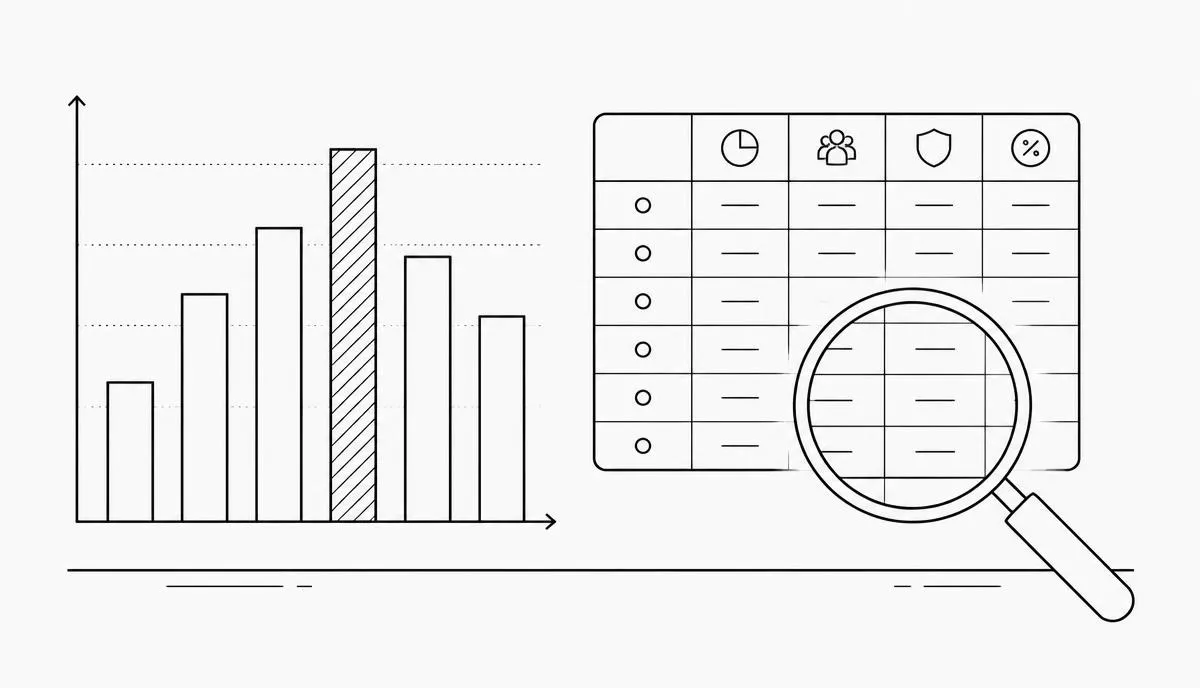
How to Benchmark Retirement Plan Fees and Performance
A step-by-step guide for advisors to evaluate fee competitiveness, justify their value, and document a defensible benchmarking process for plan sponsors.
Why Benchmarking Matters
Benchmarking retirement plan fees and performance is one of the clearest ways advisors can demonstrate procedural prudence under ERISA. A consistent, documented process protects plan sponsors, justifies advisor value, and surfaces optimization opportunities for participants.
Step 1: Define the Scope
Decide what you are benchmarking, whether investment expenses, recordkeeping fees, advisor compensation, or total plan cost. Match each component to a comparable peer universe based on plan size, participant count, and average account balance.
Step 2: Gather Reliable Data
Pull current fee disclosures (404a-5 and 408b-2), service agreements, and investment lineups. Use an independent data source, and never rely solely on provider-supplied benchmarks. PlanTools data feeds normalize this information automatically.
Step 3: Select Appropriate Peer Groups
A small plan should not be compared to mega plans. Segment by plan asset size, participant count, and industry where relevant. Document why each peer group was chosen so the rationale is defensible.
Step 4: Benchmark Investment Performance
Evaluate funds against their primary prospectus benchmark, a relevant peer group, and a consistency metric like CGOG™. Performance should be reviewed across multiple periods (1, 3, 5, and 10 year) and risk-adjusted measures such as Sharpe ratio and information ratio.
Step 5: Benchmark Fees
Compare investment expense ratios, recordkeeping per-head and asset-based fees, advisory fees, and any wrap or revenue-sharing arrangements. Convert everything to basis points and dollar terms so the committee sees both perspectives.
Step 6: Document the Process
Create a written report capturing the data sources, peer groups, findings, and the committee’s decisions. Store it in a fiduciary vault so the trail is complete if challenged.
Step 7: Establish a Cadence
Benchmark fees at least every three years and investment performance quarterly. Set automated alerts for material changes, since outsized fee shifts or performance breaches should trigger an interim review.
How PlanTools Helps
PlanTools combines benchmarking, investment monitoring, and fiduciary documentation in one platform. Advisors can produce defensible reports in minutes, demonstrate value clearly to plan sponsors, and keep every committee meeting on the right side of ERISA.